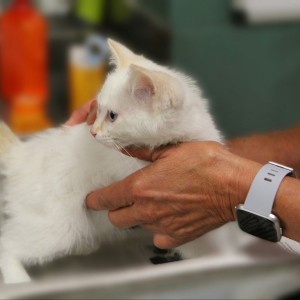
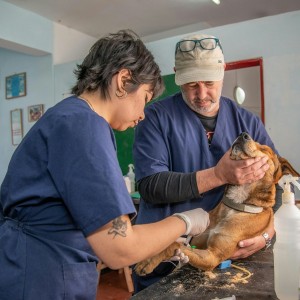
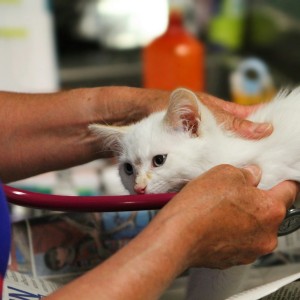
The overarching purpose of the AAFP Anesthesia Guidelines (hereafter referred to as the ‘Guidelines’) is to make anesthesia and sedation safer for the feline patient.
This case series investigates the application of 3D printing in veterinary orthopedic surgeries, emphasizing its potential to enhance preoperative planning, intraoperative precision, and...
Various antiepileptic drugs (AEDs) are used for the management of canine idiopathic epilepsy (IE). Information on their clinical efficacy remains limited.
The field of animal healthcare is in a constant state of evolution, with the veterinary industry experiencing significant transformations due to the introduction of novel technologies and innovative...
Canine Papillomavirus (CPV) is a prevalent viral infection in dogs, characterized by the formation of benign warts or papillomas on the skin and mucous membranes.
Two molecular clones of feline immunodeficiency virus were compared. The first clone, 34TF10, was from a Petaluma, Calif., isolate; the second, PPR, was isolated from a cat in the San Diego, Calif.,...
Canine babesiosis is a common tick transmitted disease of dogs worldwide. A number of Babesia sp. can infect dogs and the spectrum is increasing as molecular methods are developed to differentiate...
Infection of domestic cats with the feline immunodeficiency virus (FIV) represents an important veterinary health problem and a useful animal model for the development of vaccines against acquired...
To determine the distribution of force between the articular surfaces of the humerus and radius and between the humerus and ulna in normal canine forelimbs.
Feline coronavirus (FCoV) infections are endemic among cats worldwide. The majority of infections are asymptomatic or result in only mild enteric disease.