

Penn Vet Scientist Receives USDA NIFA Funding to Advance Early-Life Probiotic Strategies for Dairy Calves
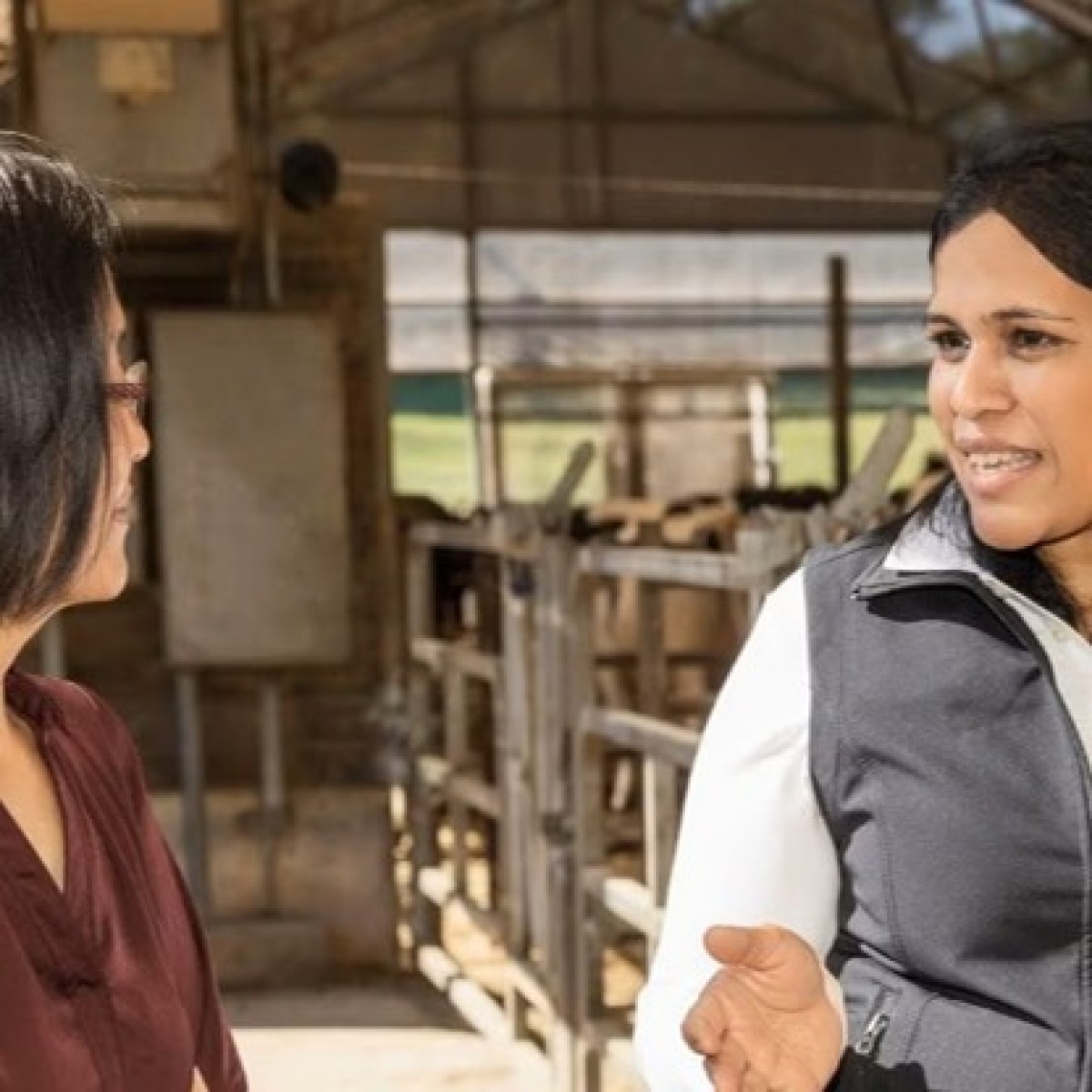
The Mark Whittier and Lila Griswold Allam Associate Professor of Ruminant Nutrition, Dipti Pitta, PhD, at the University of Pennsylvania’s School of Veterinary Medicine (Penn Vet) has received a $650,000 grant from the U.S. Department of Agriculture’s National Institute of Food and Agriculture (USDA NIFA) to advance innovative research aimed at improving dairy calf health, growth, and lifelong productivity through targeted early-life microbiome interventions.
This newly funded, three-year project focuses on developing and evaluating a novel probiotic cocktail derived from beneficial bacteria naturally present in neonatal calves. The preweaning period represents a critical window for microbial programming, as the gut and rumen microbiome rapidly develop and help shape immune function, nutrient utilization, and overall performance.
Dr. Pitta and her team have isolated native microflora from healthy neonatal calves and developed a targeted probiotic formulation designed to reintroduce and sustain these beneficial early-life colonizers in the developing gut. The study will evaluate how administering this probiotic cocktail during the preweaning phase influences microbial colonization patterns, rumen fermentation pathways, immune responses, and growth performance.
The researchers will also examine how combining these early-life colonizers with selected feed supplements enhances beneficial fermentation processes, including acetate-dependent butyrate synthesis, which improves rumen development and energy efficiency. The project integrates calf feeding trials with controlled in vitro fermentation studies to assess microbial community shifts, hydrogen utilization dynamics, fermentation end products, and long-term impacts on animal performance.
“Early life is a powerful window of opportunity to shape the rumen microbiome in ways that can influence an animal’s performance for years to come,” said Pitta, who leads the Agricultural Systems and Microbial Genomics Laboratory, and is a founding member of Penn Vet’s Center for Stewardship Agriculture and Food Security. “By leveraging beneficial native microbes and strategic nutritional support, we aim to develop practical solutions that improve calf health, feed efficiency, and long-term dairy sustainability.”
By optimizing microbial development during this critical early-life stage, the research could strengthen immune resilience, enhance growth, and lay a foundation for lifelong productivity. The findings are expected to provide science-based tools that dairy producers can adopt to improve efficiency and sustainability across modern dairy systems.
This project is supported by the U.S. Department of Agriculture’s National Institute of Food and Agriculture (USDA NIFA) through its Animal Nutrition, Growth, and Lactation program.
Author: Martin J. Hackett
Source: https://www.vet.upenn.edu/
 Comments
Related Articles


More news




Copyright © 2026 - All Rights Reserved
ISSN 2768-198X
List
Add
Please enter a comment