

The Rescued ‘Rebel’ that Inspired an Unending Scientific Legacy
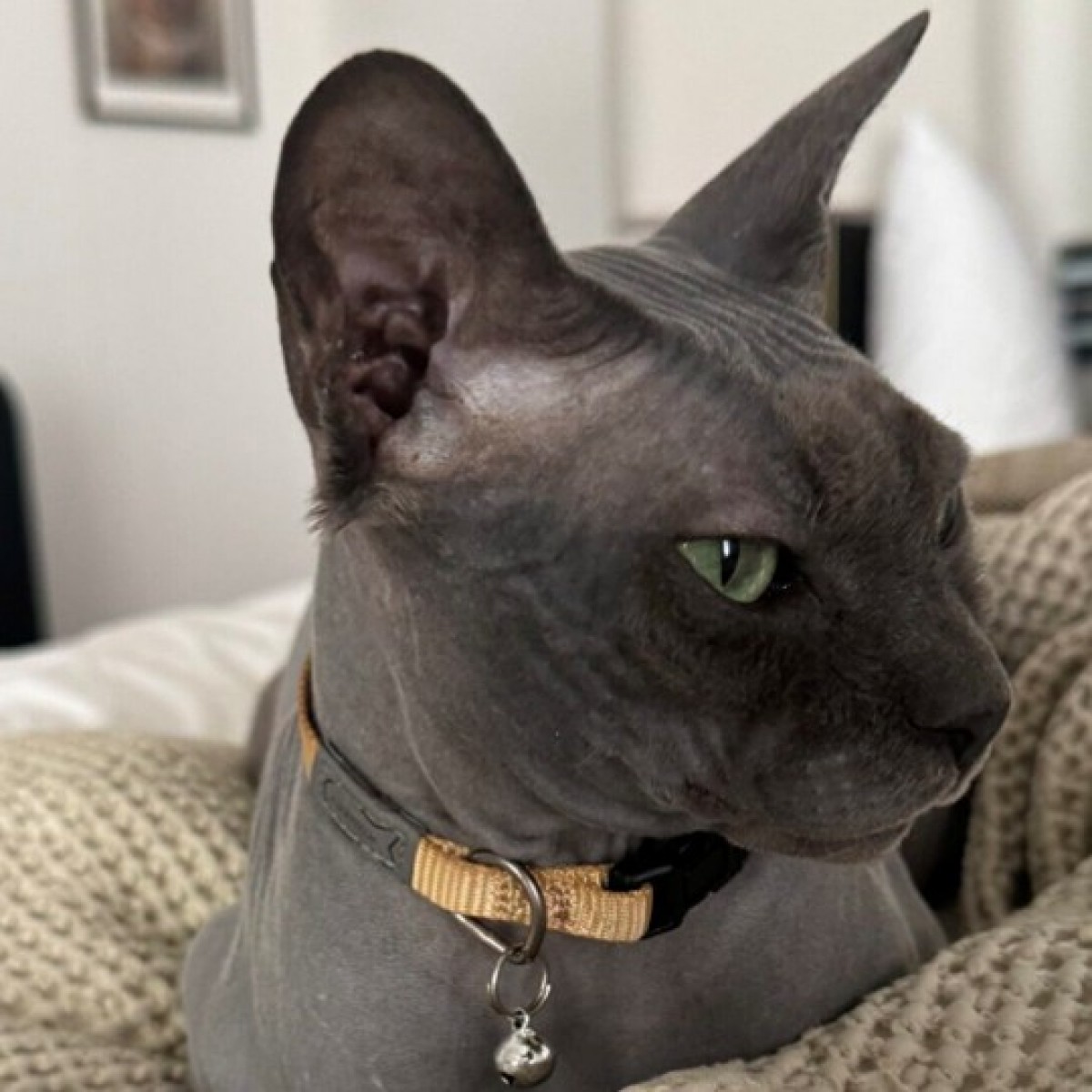
The cat carrier at the Ohio animal shelter had warning signs about its occupant’s hostility, but Amos Cader was undeterred.
He had seen a picture of the stoic Sphynx online with a plea that the cat needed someone special to provide the love that no other would-be adopters could seem to find for him. Everyone who took the cat brought him back.
“They said, ‘This is the most aggressive cat we have,’” Cader says. “They even sent me a photo of him in this Hannibal Lecter mask thing that they said they had to use to trim his nails.”
When the carrier opened, however, Vladimir jumped onto Cader’s leg and crawled into his arms. Cader happily took what he now describes as the sweetest cat in the world home to New York City.
“They said, ‘When he meets your girlfriend, he’s not gonna be nice,’” says Cader, whose now-wife Anna breaks in during an interview: “They were warning him to protect me while I sleep, and the next morning we shared a bagel, me and the cat.”
Vladimir, who was estimated to be 5 or 6 years old at the time of rescue, grew to love traveling around New York and the world with the couple, who carried the cat around contentedly in a special bag.
But then Amos Cader’s constant companion became ill and was diagnosed with hypertrophic cardiomyopathy, which causes the heart muscle to thicken, making it harder for the organ to pump blood. When Cader discovered there were no treatments, just comfort care, he was devastated.
Cader spent hours scouring the web, looking for a shred of hope, talking with human cardiologists, buying medications that seemed promising. When he found that the NC State College of Veterinary Medicine is at the forefront of feline cardiac research, he began emailing with Dr. Joshua Stern, the associate dean of research and graduate studies, who has dedicated his career to studying HCM.
The ongoing relationship has led the Caders to fund a research fellow in Stern’s lab and to create the Vladimir Cader Early Innovator in Feline Research Award — given to an NC State trainee who has demonstrated exceptional innovation in feline-focused research over the past three years.
Last week, the couple traveled to Raleigh to help announce that they have created the Vladimir Cader Feline Health Research Distinguished Chair at NC State with Stern as the first recipient.
The Caders, who have two other Sphynx cats, 5 and Vanya, say their deep grief over Vladimir, who passed away in 2024, compelled them to create the endowment to do everything they can to keep their little loves healthy.
“The special thing about Vlad was just seeing that, really, no one gave this cat a chance, this cat who just clearly had so much love to give,” says Amos Cader, wiping tears from his cheek. “One of the big warning labels was that he could never be around another cat, but we got his sister 5 as a kitten, and he was the sweetest big brother in the world. He would groom her and cuddle her.”
Anna Cader had discovered 5, named for a character in the Netflix series The Umbrella Academy, at a shelter in Maryland about five months after they welcomed Vladimir into their home. Amos, a businessman, and Anna, a nail artist, say the only times they ever witnessed Vlad be difficult was when the carrier came out.
“He had a very real fear of being abandoned,” Anna Cader says. “That’s part of why we got him 5, because we were like, ‘OK, you just need to know this is your home.’ We thought, maybe if she’s comfortable, he’ll be comfortable, and that was the case. They were really bonded.”
After Vladimir died, 5 was despondent, Amos Cader says.
“They say cats don’t experience loss, but my cleaner would literally send me videos of her just screaming at the door anytime I left,” says Cader, who grew up with cats in his New York home. “She would scream at the window. There was a little spot where they would sit and watch the sunset, and she would just sit there.”
Now 5 has Vanya as a companion. They love their new hairless duo, but talking of Vladimir will always bring tears to Amos and Anna Cader.
“It was hard having so little time with him after I feel like I found him so late,” Amos Cader says. “I feel like the world already took five years from him.”
When Vladimir was dying, Cader would sometimes sleep on the veterinary hospital floor to be near him, he says. One night, the medical workers needed to transfer Vlad between hospital services and put him in a carrier.
“He had that ‘dangerous cat’ sign on his door again,” says Cader as tears still stream. “I was just so sad that it ended how it started. It was so hard seeing his life end with that aggressive cat sign back, because he had tried so hard, and I hope he knew we were just trying to help him.”
Now Vladimir’s name will be a sign of help to cats everywhere.
Source: https://news.cvm.ncsu.edu/
 Comments
Related Articles



More news


Copyright © 2026 - All Rights Reserved
ISSN 2768-198X
List
Add
Please enter a comment