MY ACCOUNT | NEWSLETTER |

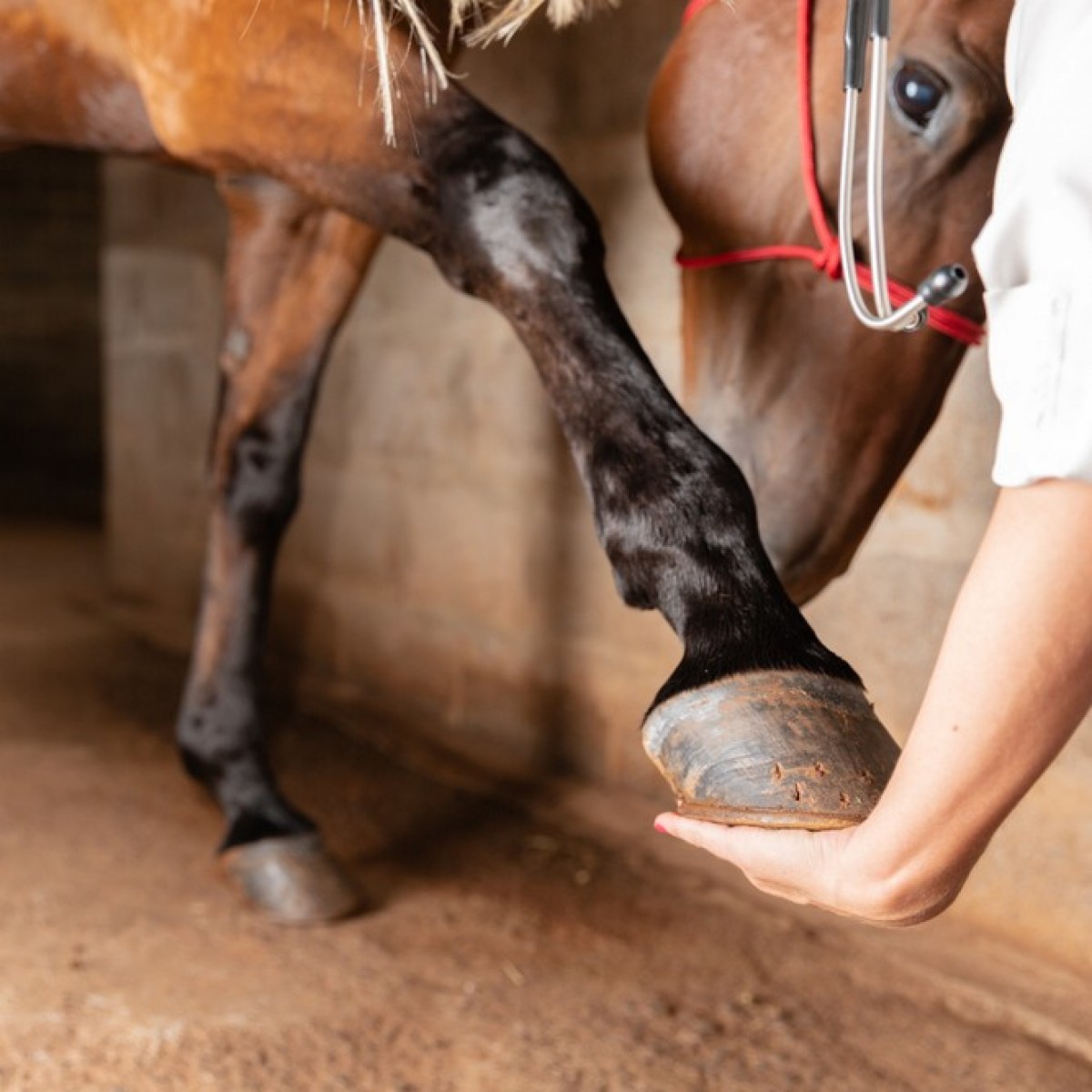
Cryotherapy can be a very valuable complementary tool for pain relief in horses with laminitis.


In the face of a life-threatening outbreak of laminitis, horses require aggressive pain management. In addition to traditional pharmaceuticals, cryotherapy can help relieve pain, but only if specific temperatures are reached. Unlike humans, horses can tolerate the prolonged cooling of their limbs.

Recently it has been studied what temperature should be reached to benefit from the pain relief provided by cooling. In the study, healthy horses without laminitis had a forelimb immersed in a cold bath up to the accessory carpal bone. The water temperature was slowly lowered from 34 ° C to 1 ° C. At specific times in the study, skin temperatures and reactions to a stimulus were recorded along the cane bone. The response of each horse to the stimulus was determined using a device that pressed a small 1 mm blunt pin on the horse's skin with increasing force until a reaction was observed. Reactions included lifting the foot, flexing the muscles of the tested limb, or moving the weight of the body away from the stimulus.

Skin and water temperature

“The study revealed that the horses were significantly less reactive to the stimulus once the skin temperature dropped below 7 ° C. However, to achieve a skin temperature of 7 ° C, the water temperature had to be 2 ° C, ”explains Peter Huntington, BVSc., MACVSc., Director of Nutrition for Kentucky Equine Research. Therefore, cryotherapy may prove to be a valuable and much-needed complementary pain relief modality for laminitis horses. “Many pharmaceutical drugs are used today to treat horses with laminitis, but not all of these drugs provide adequate pain relief for all patients. Also, some medications have significant side effects that must be considered on an individual basis, ”Huntington said. A variety of nutritional, physical, and endocrine factors can trigger inflammation and pain in this area, and that pain must be addressed quickly for a positive outcome.

Exploring Cryotherapy for Laminitic Horses. Kentucky Equine Research Staff

*Rainger, J.E., S. Wardius, C. E. Medina-Torres, S.M. Dempsey, N. Perkins, and A.W. van Eps. 2021. The effect of regional hypothermia on mechanical nociceptive thresholds in the equine distal forelimb. Veterinary Journal 269:105607. DOI: 10.1016/j.tvjl.2021.105607

Like0
Dislike0
  • Please enter a comment


Name *
Email address *
Comment *


* Required fields

Information on the processing of your personal data
We inform you that, in compliance with the provisions of current national and European regulations for the Protection of Personal Data and Services of the Information Society and Electronic Commerce, by sending us this form you are expressly giving your consent to Grupo Asís Biomedia , SL, (hereinafter, "ASIS GROUP") so that, as the person in charge, it may process your personal data in order to respond to your request for contact and information by electronic means.

Likewise, when you expressly consent, we will process your personal data to send you specialized information, newsletters, offers and exclusive promotions from GRUPO ASIS and related companies.

For the aforementioned purpose, GRUPO ASIS may transfer your data to other companies linked to GRUPO ASIS or to third party service providers for the management of electronic communications and other security services, even in cases where they are outside of the European Union, provided that they legally guarantee the adequate level of protection required by European regulations.

At any time you can withdraw the consent given and exercise the rights of access, rectification, deletion, portability of your data and limitation or opposition to its treatment by contacting GRUPO ASIS by sending an email to protecciondatos @ grupoasis.com, or by written communication to address at Centro Empresarial El Trovador, 8th floor, office I, Plaza Antonio Beltrán Martínez 1, 50002, Zaragoza (Spain), indicating in either case the Ref. Personal data and the right you exercise, as well as attaching a copy of your ID or replacement identification document.


I have read and accept the treatment of my data according to the informed purpose and according Legal notes and the Privacy Policy
I wish to receive commercial information from GRUPO ASIS and related companies


More news

Texas A&M Research Reveals More Than 84% Of Dogs Show Signs Of Fear, Anxiety

Like0
Dislike0

Veterinary Pharmaceuticals Market Research and Global Forecast Report 2026-2031: Rising Demand for Parasiticides and Dermatology Products and Growth Potential in

Like0
Dislike0

EXPRESS: Azotaemia and outcomes in male cats with initial and recurrent urethral obstruction: a multicentre retrospective study of 601 cats (2020-2024).

Like0
Dislike0

Clinical findings and risk factors for clinical outcomes in dogs with myxomatous mitral valve disease hospitalized for cardiogenic pulmonary edema.

Like0
Dislike0

Soluble triggering receptor expressed on myeloid cells-1 as a predictive biomarker in sepsis: insights into cut-offs, mortality risk, and treatment guidance-secondary analysis of the Next GeneSiS-Trial.

Like0
Dislike0

Newsletter


News of interest

EVENTS

Copyright © 2026 - All Rights Reserved
ISSN 2768-198X

Top