

Implant treats Type 1 diabetes by oxygenating insulin-producing cells
Cornell researchers have developed an implant system that can treat Type 1 diabetes by supplying extra oxygen to densely packed insulin-secreting cells, without the need for immunosuppression. The system could also potentially provide long-term treatment for a range of chronic diseases.
The findings were published Aug. 11 in Nature Communications. The co-first authors were former postdoctoral researcher Tung Pham and doctoral candidate Lora (Phuong) Tran.
The technology builds off previous implantable encapsulation devices developed in the lab of Minglin Ma, professor of biological and environmental engineering in the College of Agriculture and Life Sciences (CALS) and the paper’s senior author.
Ma has explored a variety of ways to address Type 1 diabetes, in which the body’s immune system turns hostile and destroys insulin-producing pancreatic cell clusters, known as islets. Without insulin, the body has no way to deliver glucose – sugar – into muscle and tissue cells to generate energy. People with Type 1 diabetes typically manage the disease through daily insulin injections or insulin pumps, but even with that treatment, patients still suffer devastating effects of the disease.
Ma’s previous implantable devices have proved effective in controlling blood sugar in diabetic mice, but they can only last so long.
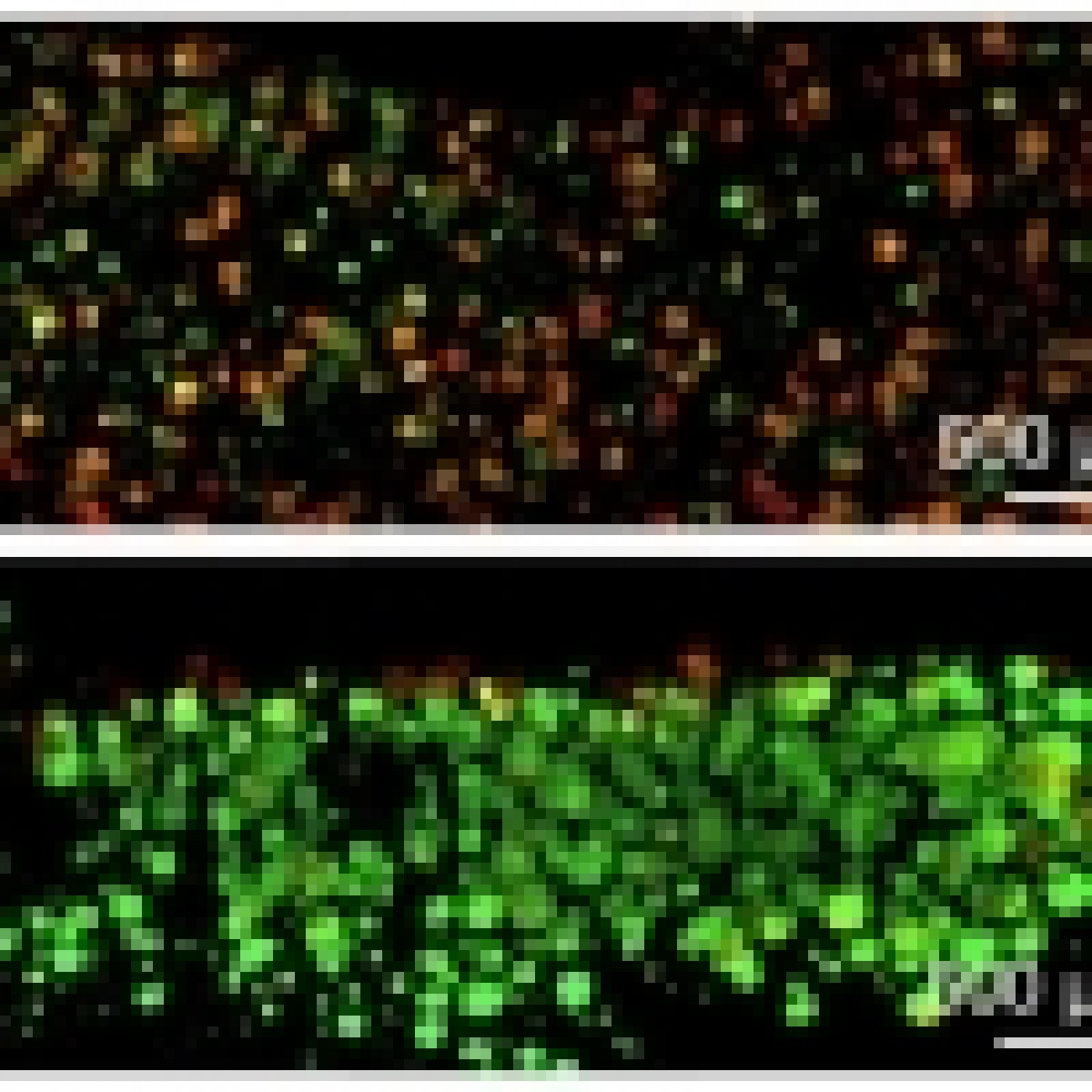
“One of the major challenges is the implant itself often dies due to the lack of oxygen after implantation,” Tran said. “In our lab, they had success in mice that lived over one year, and they controlled the diabetes very effectively with some small capsules without oxygen generation. However, when we scale up, we need more cells, we need more density, especially. We need a higher dose. If we implant without generating oxygen, the cells often die within two weeks.”
Ma’s team developed the new system in collaboration with electrochemical researchers from Giner Inc., including co-author Linda Tempelman, Ph.D. ’93.
The key components of the system are a cylindrical capsule with a ring-shaped cross-section that contains transplanted insulin-secreting cells, and an electrochemical oxygen generator that is roughly the size of a dime and removeable. A nanofibrous membrane outside the capsule protects the cells from the host body’s immune system; a permeable membrane in the core of the capsule allows the central supply of oxygen to reach the ring of cells.
“We have to meet two requirements,” Tran said. “The first is immune protection. And second, you have to maintain mass transfer, like the glucose and other nutrients and molecules that can go in and out.”
Working with Dr. James Flanders, associate professor emeritus in the College of Veterinary Medicine, the researchers successfully tested the system in rat models.
“It’s the proof of concept. We really proved that oxygenation is important, and oxygenation will support high cell-density capsules,” Tempelman said. “The capsules are immune protective and last for a long time without having some kind of fouling of the membrane. The body never likes when you put a foreign substance in. So that’s the engineering in the Ma Lab, to look for materials and coatings for the materials that are immune protective, but also don’t invoke excess response from the body because of the material.”
The new system would enable a much greater number of the 2 million people who suffer from Type 1 diabetes in the U.S. to now have an islet transplant or cell therapy without requiring immune suppression, which is considered too dangerous for routine use. Also, the new system can provide much tighter sugar control, effectively curing the disease and enabling the person to eat, drink and exercise like everyone else.
The next step will be to implant the system in a pig model, and also test it with human stem cells. The researchers are interested in eventually trying to use the system for implanting different cell types in humans for long-term treatment of chronic diseases, according to Tempelman, who is CEO of Persista Bio Inc., a new startup she founded with Ma and Flanders that is licensing these technologies.
“We see an age where people will be getting implants with allogeneic cells from other human beings, from stem cell lines, and using it long term to treat things that your body is missing,” Tempelman said. “Here we’re missing insulin. In pain control, maybe you need more endorphins or some other molecule. In enzyme replacement therapy, you need more enzymes. We’re interested in things like other autoimmune diseases where there’s inflammation that’s out of control.
“So maybe you could put a small molecule in that would treat inflammation, and then someone, like a Lupus patient, wouldn’t have to take an oral medication. They could just have a low-level implant that provides a low amount of it.”
Co-authors include Flanders; Christopher Piccirillo ’24 and Alan Li ’23; and Simon Stone of Giner Inc.
The research was supported, in part, by the National Institutes of Health, the Hartwell Foundation, Breakthrough T1D and Novo Nordisk.
Authors: David Nutt, Cornell Chronicle
Source: https://news.cornell.edu/
 Comments
Related Articles

.jpg)


More news






Copyright © 2026 - All Rights Reserved
ISSN 2768-198X
List
Add
Please enter a comment