

WSU seeks to curb deadly pneumonia threatening bighorn sheep recovery
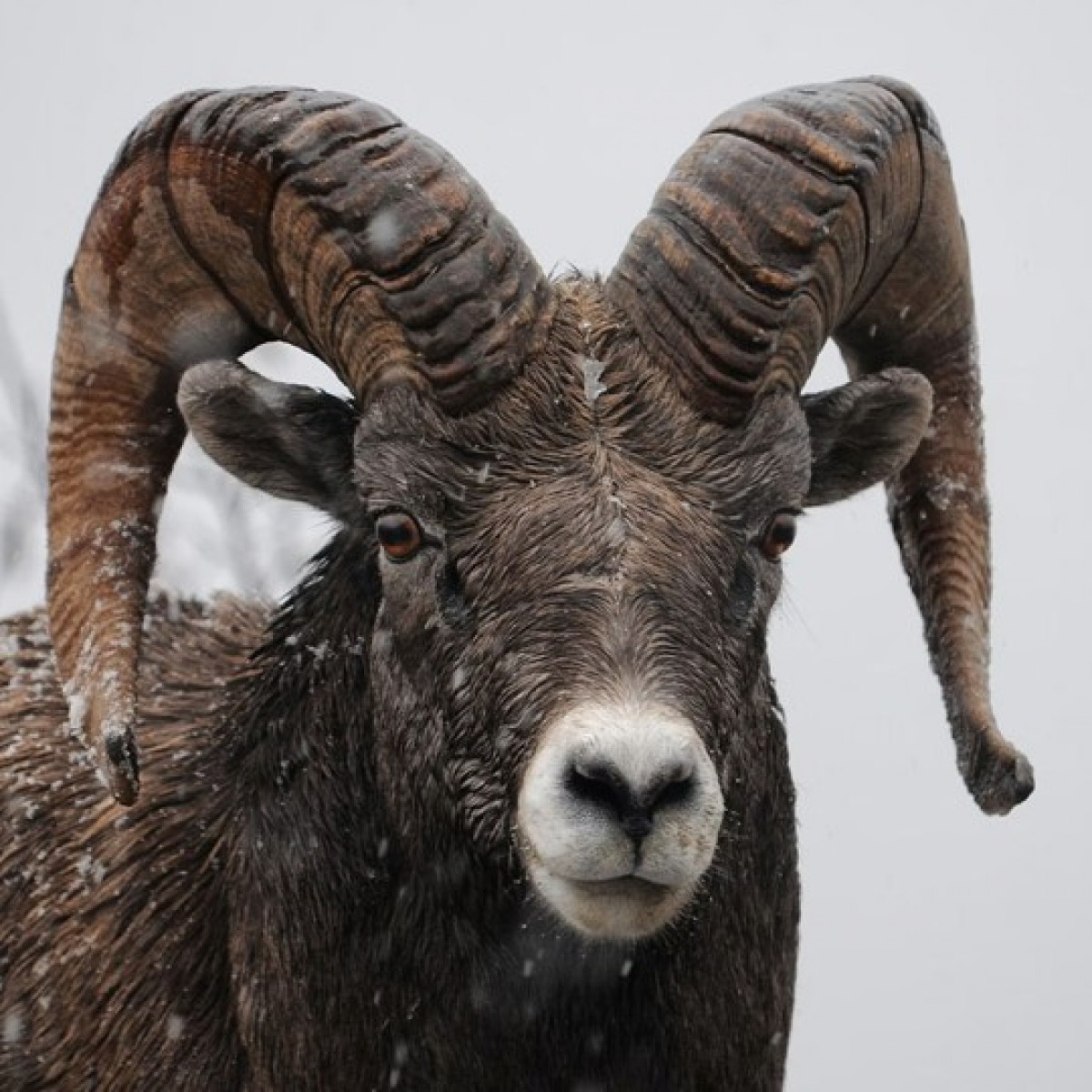
Washington State University is partnering with state wildlife agencies in Washington, Idaho, and Oregon, along with small ruminant owners, to help protect iconic bighorn sheep populations from a deadly respiratory disease linked to domestic sheep and goats.
This spring, a team of veterinarians, researchers, and students from the WSU College of Veterinary Medicine’s Field Disease Investigation Unit and the Veterinary Teaching Hospital’s large animal mobile service will begin connecting with small flock owners near bighorn sheep habitat to offer free ongoing disease surveillance. The program, which is completely voluntary, focuses on identifying and, ideally, removing animals infected with Mycoplasma ovipneumoniae (M. ovi), a bacterium strongly associated with deadly pneumonia outbreaks in bighorns that have devastated populations across the West.
“Domestic sheep and goats can carry it without ever showing disease, but it can be fatal to bighorn sheep,” said Dr. Craig McConnel, a veterinarian and director of WSU’s Veterinary Medicine Extension. “That’s why identifying it on properties adjacent to bighorn habitat is so important, both for understanding risk and guiding management decisions.”
Although M. ovi tends to be harmless or cause only mild respiratory disease in domestic goats and sheep, outbreaks in bighorn sheep can decimate flocks and lead to years of lamb mortality that prevent population recovery. The disease spreads primarily through direct contact with respiratory secretions, and even brief interaction between domestic sheep or goats and bighorn sheep can lead to an outbreak. There is no effective treatment or preventive vaccine for pneumonia in bighorn sheep.
“We really don’t have a thorough grasp of the prevalence in domestic herds,” McConnel said. “We know it’s there, but we would like to improve our understanding of the regional small ruminant dynamics, which is important for limiting its spread into bighorn populations.”
Sampling will initially focus on the Snake River drainage, including Asotin County and neighboring areas extending into eastern Oregon’s Wallowa region. The WSU team will perform an initial round of nasal swab testing on the flocks at participating properties this spring. That will be followed by a second visit to conduct confirmatory testing on both positive and negative animals, in addition to no‑cost biosecurity screening through the Washington Animal Disease Diagnostic Laboratory at WSU for other important sheep and goat diseases. Testing for M. ovi can then be conducted annually for continued monitoring and to better understand how widespread the bacterium is across the region.
Education is another important goal of the project. McConnel said the hope is to help producers better understand disease risks within their own flocks while also supporting wildlife conservation.
The effort builds on earlier work led by the Asotin County Conservation District, which has been sampling small ruminant properties in bighorn-adjacent areas for several years.
“People love bighorn sheep, and protecting them depends on everyone working together,” McConnel said. “WSU is proud to play a central role in that effort.”
In addition to helping limit disease transmission, the project provides hands‑on training opportunities for fourth‑year veterinary students rotating through the Veterinary Teaching Hospital’s large animal mobile service under the direction of Dr. Alyssa Marre. Students gain experience in small ruminant handling, disease surveillance, and biosecurity practices, preparing them for careers in rural and mixed‑animal practice.
“This is a rare opportunity where teaching, research and outreach all come together,” McConnel said. “It gives students meaningful field experience and gives producers valuable information about their herds.”
Authors: Devin Rokyta
Source: https://news.wsu.edu/
 Comments
Related Articles


More news




Copyright © 2026 - All Rights Reserved
ISSN 2768-198X
List
Add
Please enter a comment