

Veterinary Viewpoints: Recommendations for a successful lambing and kidding season
By Professor Lionel J. Dawson, BVSc, Oklahoma State University College of Veterinary Medicine

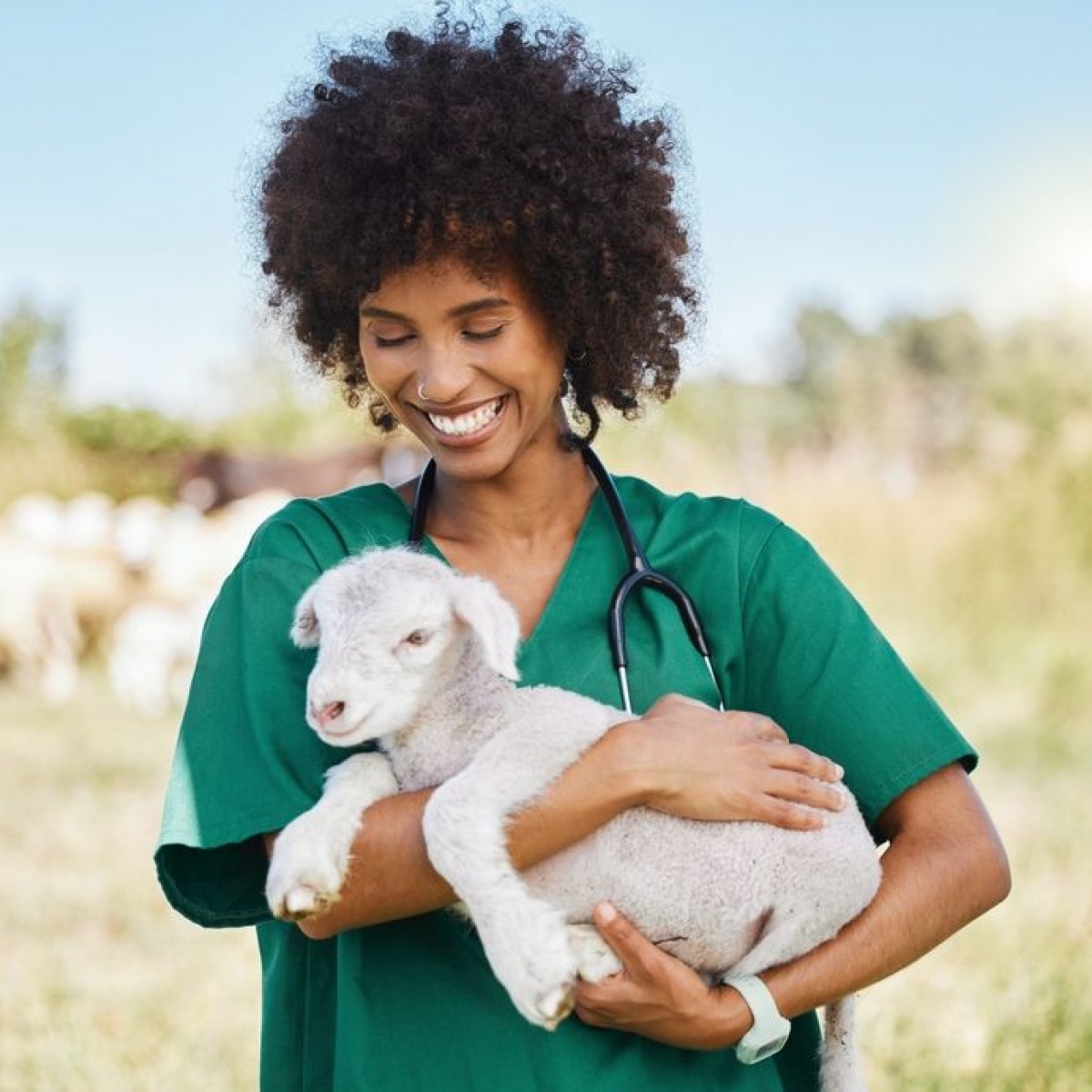
As mother nature ushers in the spring season, lambing and kidding season is also upon us. Livestock owners everywhere are busy in preparation for the care that comes with these new lives. To ensure successful births of lambs and kids, it is important to monitor the pregnant does and ewes, be prepared to aid in a difficult birth and have a plan to care for the new babies in order to increase the survival rate.
During pregnancy
Monitoring pregnant does and ewes is critical for a better outcome for both mothers and babies.
During the last month of pregnancy, isolate these animals and provide them with clean water, good-quality hay and grain. Grain supplement should be increased in the last third of pregnancy. Supplementing with an energy-dense diet helps prevent pregnancy toxemia/ketosis/twinning disease. All does/ewes need to be vaccinated with Clostridium perfringens CD&T three to four weeks before their kidding or lambing period. Many will also need to be dewormed in that same period. When deciding which does/ewes need deworming, look at the membranes around the eyeball, also known as FAMACHA scoring.
During labor
When does or ewes go into labor, monitor them to make sure the delivery progresses as it should. Active labor signs include a pregnant doe or ewe down on her side, pushing or straining, and a fair amount of clear to bloody mucus discharge from the vagina may be seen. A laboring doe/ewe will be very restless. Does may vocalize a lot and frequently try to urinate. This stage lasts one to two hours.
As labor progresses, you should increasingly see feet or the head being pushed out. If this process is not progressing, intervention is needed.
Assisting with delivery problems
Take the following steps for ewes/does experiencing delivery problems:
- Isolate the animal: place the ewe/doe in a relatively clean area, where her movement is restricted and separate from other members of the flock. If necessary, have someone assist in restraining the animal.
- Protection and cleanliness: Wash your hands thoroughly prior to examining the animal. Cut your fingernails short to avoid injury to the animal. Clean around the perineal area. Wear gloves to protect yourself from some abortive diseases that can be passed to people. Women should especially be cautious in this regard.
- Lubricate: Adequate lubrication is very important. Failure to lubricate the birth canal may cause tissue damage and, undoubtedly, a very difficult birth.
- Check for dilation: When you enter the vagina, keep your fingers close together to avoid injuring the reproductive tract. Locate the cervix and determine if it is dilated. If she is not fully dilated, give her more time and gently run your fingers around the cervix to expand the opening. If the problem is due to ring womb (an incompletely dilated cervix more than an hour after active labor), where the cervix does not dilate after massaging the cervix for 30 minutes to an hour, a caesarian section will be the best choice to save the mother and baby. Do not try to pull the fetus with a partial dilation of the cervix.
- Determine the presentation of the fetus: If dilation has occurred, assess the presentation of the fetus — if it is facing forward or backward. Compare what you feel to the anatomy of the ewe or doe to distinguish between the front and back legs. Make sure to follow the legs to the body to ensure you are working with one lamb/kid and not two coming out at the same time.
- Determine posture of the fetus: Next, you must determine how the legs and head are positioned — normal/upright. Visualize the normal presentation of the lamb/kid as you think about what parts you are feeling (Figure 1).
- Assist or not: Normally, there is no need to assist. However, it is useful to know how to assist a lamb/kid if necessary. Allow approximately 45 to 60 minutes to elapse after the water bag breaks before attempting to intervene. If no progress is made after this period, there is probably a malpresentation or a mismatch between lamb/kid size and the ewe's/doe’s pelvic size. Never rush pulling lambs/kids as a hasty intervention may cause further damage or even death to the ewes/does and/or lambs/kids.
- If the mother is not progressing in labor, the cervix is not dilated, more than two legs are felt in the vagina, or the birth canal is too narrow for the baby to come out, call your veterinarian immediately.
After birth
After lambs/kids are delivered, perform the following measures to increase chances of survival:
- Clean the mucus and water bag from the lamb's/kid’s head with a piece of clean cloth.
- Clear mucus from around the lamb’s/kid’s mouth and nose. Gently insert something, such as a piece of straw, a short distance into the nose to clear the nasal passage or induce a sneeze.
- Gently swing the lamb if necessary by its back feet with one hand to drain the fluid or mucus in the upper airways, and stop abruptly with the other hand to increase air intake.
- Spray or dip the navel of newborn lambs/kids in a 7% tincture of iodine or another good drying agent to prevent navel illness.
- Place the lamb/kid by its dam's head for her to clean the afterbirth. Do not remove the afterbirth from the kid/lamb, because the ewe or doe will use the scent to recognize her lamb/kid later.
- Check for other lambs/kids possibly remaining inside the uterus of the ewe/doe. The second birth will generally require assistance even if the first birth did not need assistance. Allow approximately 30 to 45 minutes before trying to assist with the next lamb/kid.
- Check with your veterinarian regarding the use of antibiotic therapy after a dystocia (difficult birth). Most antibiotics that are available for food animal usage are not approved for sheep and goats, so they would be used in an extra-label manner in conjunction with a valid Veterinarian-Client-Patient Relationship (VCPR) with your veterinarian.
- Give the ewe or doe Oxytocin to help her pass her placenta, involute the uterus and prevent infection of the uterus.
- The first 18 hours after birth is the most critical period. Place lambs/kids born in a warm, clean, and dry pen with their dams. Lambing/kidding pens are preferred for the first 48 hours so the mother can bond with her baby. This allows newborns full access to colostrum to get the antibodies available for protection against diseases. If the lamb or kid is weak, colostrum should be given manually, either by passing a small feeding tube or by bottle feeding. They need 15% of their body weight within 24 hours. The rule of thumb is two ounces per kilogram of body weight within 12 hours.
- As a good precaution, clean up any afterbirth from the delivery site to reduce the possible spread of disease.
As you prepare for the arrival of new babies, monitor mothers closely and be prepared to intervene if necessary. Proper care of both mothers and babies will help ensure the best outcome for all. As always, it is important to establish a relationship with a veterinarian prior to lambing/kidding season just in case assistance is needed.
The Oklahoma State University Veterinary Medical Teaching Hospital has experienced large animal clinicians who are available to come alongside you to ensure the health and wellbeing of your herd. If you are in need of a primary veterinarian, you may call the veterinary hospital at 405-744-7000 to schedule an appointment.
Read the original story on the OSU website.
 Comments
Related Articles


More news


Copyright © 2026 - All Rights Reserved
ISSN 2768-198X
List
Add
Please enter a comment