

Tiny tech tracks overheating risk in sporting dogs
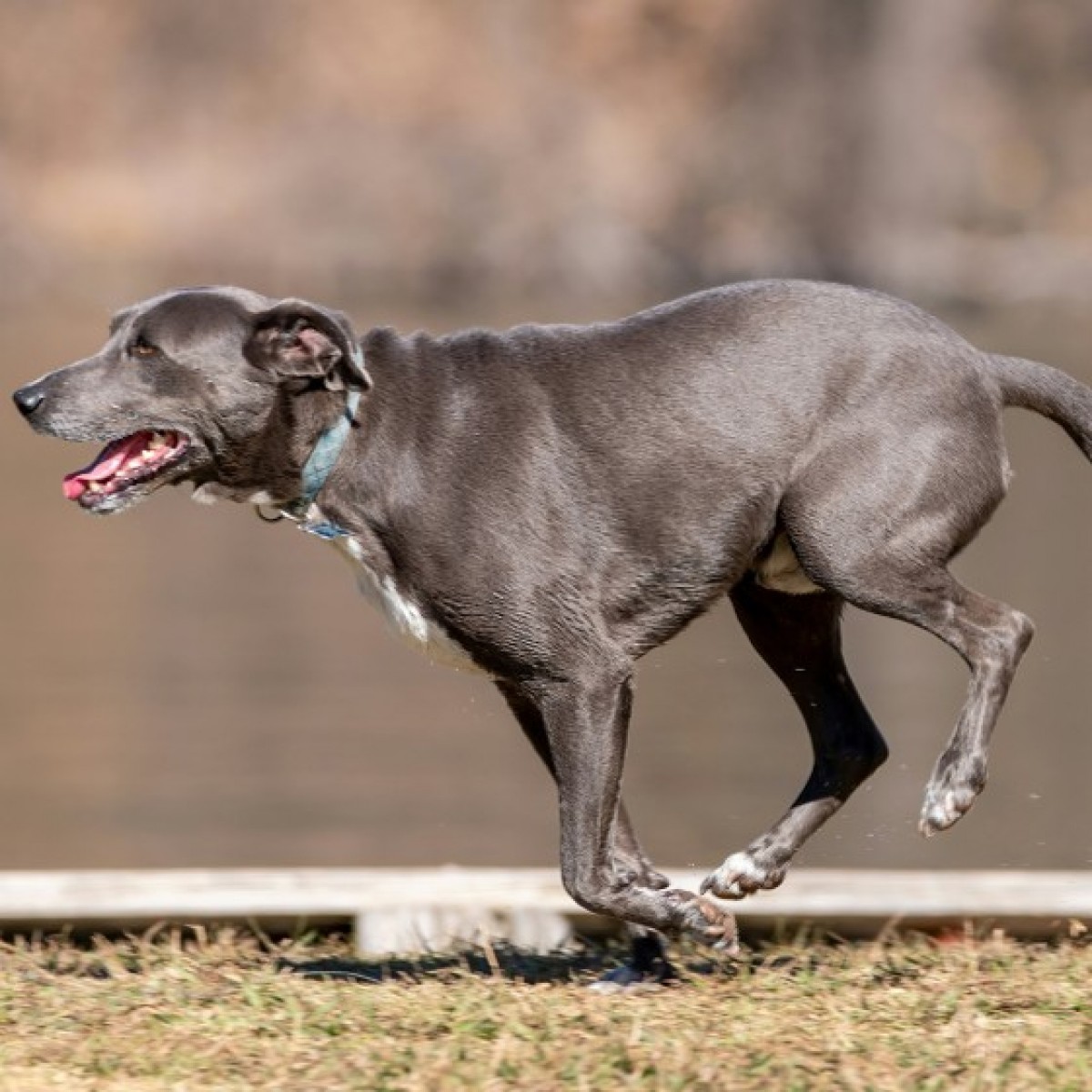
Some dogs can get so focused on a task that they ignore the world around them. This is especially true for canine athletes like hunting and working dogs. A new study from the Cornell University College of Veterinary Medicine is the first to investigate what may be early signs that a hunting dog will overheat while it’s zeroed in on its work.
“For competitive sporting dogs, their drive can outweigh their self-preservation,” said Christopher Frye, D.V.M. ’11, associate professor and senior author on the study, which published in AJVR. “When dogs overheat in the field while exercising, they can get sick and even die.”
This situation is called exertional hyperthermia, or heatstroke, and can happen quickly during strenuous exercise, especially in hot, humid conditions, or environments the dogs aren’t used to. It’s more common in canine athletes and military or police dogs, but everyday pets can also be at risk in hot weather, especially if they have underlying medical conditions.
Studies focusing on canine athletes have typically examined agility, sled and other types of working dogs, but the hunting dog population has been neglected. Frye’s study includes a mix of amateur and professional dogs with a wide range of skills, divided into randomized groups that embarked on mock hunt trials.
“Mock hunt trials are representative of what these dogs would commonly encounter in the field,” Frye said. “They’re placed in an area where game is naturally present and encouraged to use their skills to find birds.” The dogs explored regions of mixed terrain, both fields and wooded areas on a looped course with their human handlers.
The researchers examined whether there were associations between certain biomarkers of exercise stress, activity and internal core temperature. They were particularly interested in an unexplored biomarker called myoglobin, which, when elevated, indicates muscle damage and therefore exercise stress.
“The harder you use a muscle, the more likely myoglobin seeps out of damaged muscle cells into the bloodstream,” Frye said. During the study, myoglobin increased with the duration of exercise in these healthy dogs, indicating it is a sensitive marker for exercise-related muscle damage — before that damage can be detected clinically.
“Further research would be needed to help determine whether there is a threshold of myoglobin release from damaged muscle that could highlight or predict a transition from the subclinical state to that of a particular disease,” Frye said.
A look inside
Conducting the study in the field was crucial to gaining insight into a dog’s preferred working temperature. “This investigates their natural physiological preferences on that day and shows how they adjust their behavior to maintain that temperature throughout the exercise session,” Frye said.
For example, Frye’s team noted that the dogs reached an inflection point after exercising for approximately 20 minutes, at which time their temperatures stopped rising and reached a near-steady state for the remainder of the trial.
Dogs have many behaviors that maintain body temperature, including drinking, panting, seeking shade or reducing effort. “It is clear that individual dogs had their own preferred working temperatures that day, which they could maintain independently through their behavior,” Frye said.
Early in the trial, the faster a dog moved, the faster and higher its temperature rose before finding that steady state. This is meaningful in that the initial pace of a dog’s exercise could be a major determining factor in whether the dog then crosses a temperature threshold that results in exertional hyperthermia. Such a finding suggests further trials in different conditions and with a variety of canine athletes would be valuable.
This field study required the same type of portable technology that human athletes commonly wear on their wrists. To get the precise measurements necessary, Frye’s team used a tiny activity monitor comprised of a GPS unit and an accelerometer. This is a common Garmin device that they could attach to the dogs’ collars to track movement, speed and distance. A separate core temperature reading device was placed in a high-tech capsule that the dogs swallowed before exercising. The researchers then used a radiofrequency identification scanner to non-invasively download temperature data over time and synchronize it to the activity monitor.
The technology was made possible through a collaboration between the Cornell Center for Veterinary Business and Entrepreneurship (CVBE) and technology company Garmin International, Inc. Frye had worked with Garmin before on a previous pilot study in California, alongside then-UC Davis resident Dr. Callum Donnelly, the Cornell Harry M. Zweig Assistant Professor. “Garmin has been a fantastic partner in studies like these that require exact measurements and benefit canine health,” Frye said.
“The CVBE has had a fantastic networking and collaborative relationship with Garmin for several years that has transacted into both sponsored research and product testing agreements,” said Jorge Colón ’92, D.V.M. ’95, director of veterinary business education at Cornell. “Facilitating the engagement between this leader in the biometric engineering field and our college faculty for the betterment of animal health has been utterly rewarding.”
There is insight to be gained from the infusion of modern technology into research. Frye believes that the use of high-tech devices like those Garmin provided can help monitor the health not only of canine athletes, but of many house pets with a variety of medical conditions, from osteoarthritis to heart and respiratory disease.
“We have a time-honored relationship between humans and dogs, and it’s nice to help put some science to it,” Frye said.
Author: Melanie Greaver Cordova
Source: https://www.vet.cornell.edu/
 Comments
Related Articles





Copyright © 2026 - All Rights Reserved
ISSN 2768-198X
List
Add
Please enter a comment