

Cow Collar Clues: Electronic Monitoring Helps Keep NC State Dairy Herd Hardy

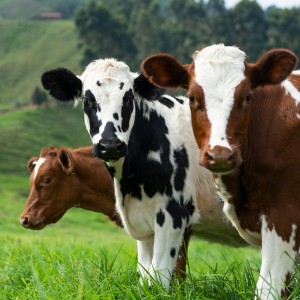
In the year that NC State’s new dairy facility has been cooling cows, providing state-of-the-art milking technology and giving veterinary students experience in best industry practices, the collars around the cows’ necks have been communicating with computers.
When dairy manager Mike Veach gets the resulting report each morning, he knows Cow 708 has been lying down more than usual, Cow No. 695 has stopped eating a sufficient amount and Cow 701 has gone into estrus and is ready for breeding.
The GEA CowScout electronic system also links the cows and their numbers to the milking parlor so that Veach also knows that Cow 695 has not been producing her usual 70 pounds of milk a day.
“By using all of those data sets, you can see patterns or trends,” Veach says. “That’s what’s really nice about the system is, the more you use it, the more data you have, and then you can see the normal for the herd, for the cow, for the season even and know when something is off.”
As the New York Times reported this month, the cow-collar devices are part of a growing industry known as precision farming, which allows producers to use technology to safeguard the health of a herd and to optimize milk production. In 2024, the livestock-monitoring industry was valued at more than $5 billion, the NYT reported.
Dr. Allison West, clinical veterinarian and head of the Teaching Animal Unit at the NC State College of Veterinary Medicine, says the benefits from NC State’s investment in the system are numerous, from helping to significantly reduce major illness in the animals to ensuring that veterinary students graduate understanding the latest technology.
“Our DVMs will be able to help producers interpret how to use that data on their own farms, because it’s very labor intensive to try to check cows every day, especially on a 1,000-head operation,” she says. “You can’t physically track who’s eating and who is in estrus. It’s very useful to know what to do with that data and help determine procedures. If the system flags the cow isn’t eating, here’s what you do. If that’s still not working, then you do this.”
The New York Times reported that the technology has allowed dairies to increase their herd counts by thousands without having to add employees. If the data show most cows are fine, no one needs to check any animals but the ill ones.
The dairy facility at the NC State College of Veterinary Medicine — constructed with the support of the R.B. Terry Charitable Foundation — is part of the Teaching Animal Unit, an 80-acre working farm right outside the college’s classroom doors. This month, 56 dairy cows call NC State home, with more on the way during calving season in December and January.
“I have definitely used the data at least five or six times in the last year to prevent something major,” West says. “A cow has alerted, and we just jump on her case, give her probiotics, some supportive care, and we’ve avoided, knock on wood, any major disasters.”
“I have definitely used the data at least five or six times in the last year to prevent something major. A cow has alerted, and we just jump on her case, give her probiotics, some supportive care, and we’ve avoided, knock on wood, any major disasters.” — Dr. Allison West
With four stomach chambers, cows have increased chances for digestion, or rumination, to go wrong. The collars monitor how long a cow chews and how long it takes food to travel through the stomach compartments.
“If their rumen isn’t functioning, the pH changes, their gut flora changes, and they can snowball into one of many very serious diseases, including metabolic derangement or musculoskeletal disorders,” she says. “By getting ahead of it, we can try and give them fluids, give them probiotics and get their rumen functioning again.”
With calving coming up, the system will help West, Veach and the rest of the farm crew better monitor at-risk cows, too. Even cows that aren’t in calf should rest 11 to 12 hours a day, West says.
“For anything the system flags, we look at the cows and ask what’s happening,” she says. “Are they uncomfortable? Is that why they’re not laying down? Do they have a metabolic problem, and that’s why they’re not eating or not ruminating? This is preventative care at its finest.”
Author: Burgetta Eplin Wheeler
Source: https://news.cvm.ncsu.edu/
 Comments
Related Articles

More news



Copyright © 2026 - All Rights Reserved
ISSN 2768-198X
List
Add
Please enter a comment