

Discretionary donations support research, students and clinical care
Donor-supported discretionary funds are providing Washington State University’s College of Veterinary Medicine with the flexibility to back important programs across the college and keep high-impact research moving forward during uncertain periods of federal funding.
Most gifts to the college are slated for specific purposes – a scholarship, new technology or research into a disease or species. While these donations are essential, discretionary gifts allow the college to address unforeseen and emerging needs, from purchasing equipment to supporting students and research.
“Discretionary gifts give us the ability to respond quickly when a project or program needs support,” the college’s dean, Dori Borjesson, said. “They help us maintain momentum in research, support our students and strengthen programs that advance the college’s mission. Donors trust us to make the right decisions, and that trust is invaluable.”
During the past three years, donors have contributed more than $3.4 million in discretionary funding, which has helped to support the college’s strategic initiatives, 125th anniversary activities and programs such as Healthy People + Healthy Pets. At the Veterinary Teaching Hospital, such funding recently helped pay for a new computed tomography (CT) scanner, establish a small-ruminant in vitro fertilization service and upgrade electronic medical record systems.
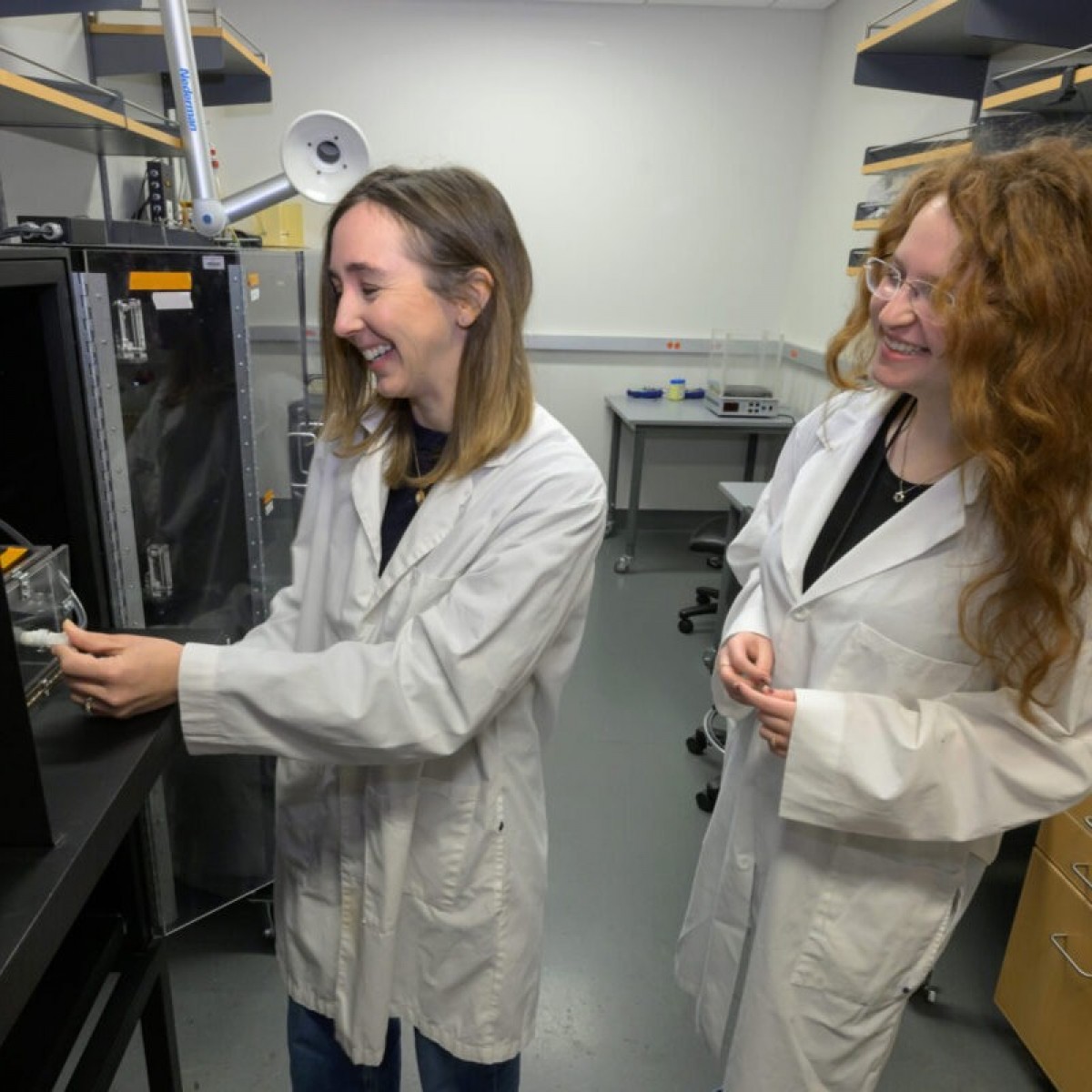
Discretionary funding also helped to move forward research led by faculty like Kristen Delevich, an assistant professor in the Department of Integrative Physiology and Neuroscience, and Brooke Ramay, an associate professor in the Paul G. Allen School for Global Health.
Delevich had submitted a proposal to the National Science Foundation to study how puberty and sex hormones influence the developing adolescent dopamine system. The work has the potential to help explain sex differences in brain function and offer insight into conditions such as ADHD, schizophrenia and Parkinson’s disease. While her proposal earned excellent scores, it was ultimately not funded due to reductions in federal funding. Discretionary support from the college has allowed her to begin preliminary studies to demonstrate feasibility and strengthen future proposals.
“With the uncertainty of the funding landscape, this support helps cushion us so progress can continue,” Delevich said. “It keeps the science moving forward and ensures our graduate students remain supported during these gaps. It’s helping us build the proof-of-concept data that reviewers were excited about and positions us to apply to NSF or the National Institutes of Health and other foundations.”
Ramay faced a similar challenge when the Centers for Disease Control and Prevention reduced funding for her study focusing on antibiotic-resistant bacteria and how they move between humans and animals in household and clinical settings. Discretionary dollars allowed Ramay and her team to continue their work, including important whole-genome sequencing of samples that has provided insights into which bacterial strains are circulating between species and how likely they are to cause disease.
“Whole-genome sequencing allows us to identify specific types of antibiotic-resistant bacteria and see whether they are the same kinds known to cause serious infections in people. It also helps us begin to understand how these bacteria may be spreading between humans and animals,” Ramay said. “This funding made it possible for us to study these bacteria in far greater detail than would otherwise have been possible.”
Borjesson said these kinds of immediate impacts are exactly why discretionary support matters.
“Instead of shelving important work, they were able to keep their projects, their teams and their momentum intact,” she said.
Discretionary funding is also being used to support students, including through mini-scholarships for graduate students, the Veterinary Student Summer Research Fellowship Program and undergraduate Top Scholar awards.
Borjesson said flexible, unrestricted philanthropy remains one of the most important tools the college has to navigate an increasingly unpredictable funding environment.
“Discretionary gifts help us support innovation, respond to emergencies and ensure our programs continue to move forward, even when the broader funding landscape is uncertain,” she said. “It’s one of the most impactful ways people can support our mission.”
Author: Devin Royta
Source: https://vetmed.wsu.edu/
 Comments
Related Articles


More news




Copyright © 2026 - All Rights Reserved
ISSN 2768-198X
List
Add
Please enter a comment