MY ACCOUNT | NEWSLETTER |

Gastric Helicobacter species associated with dogs, cats and pigs
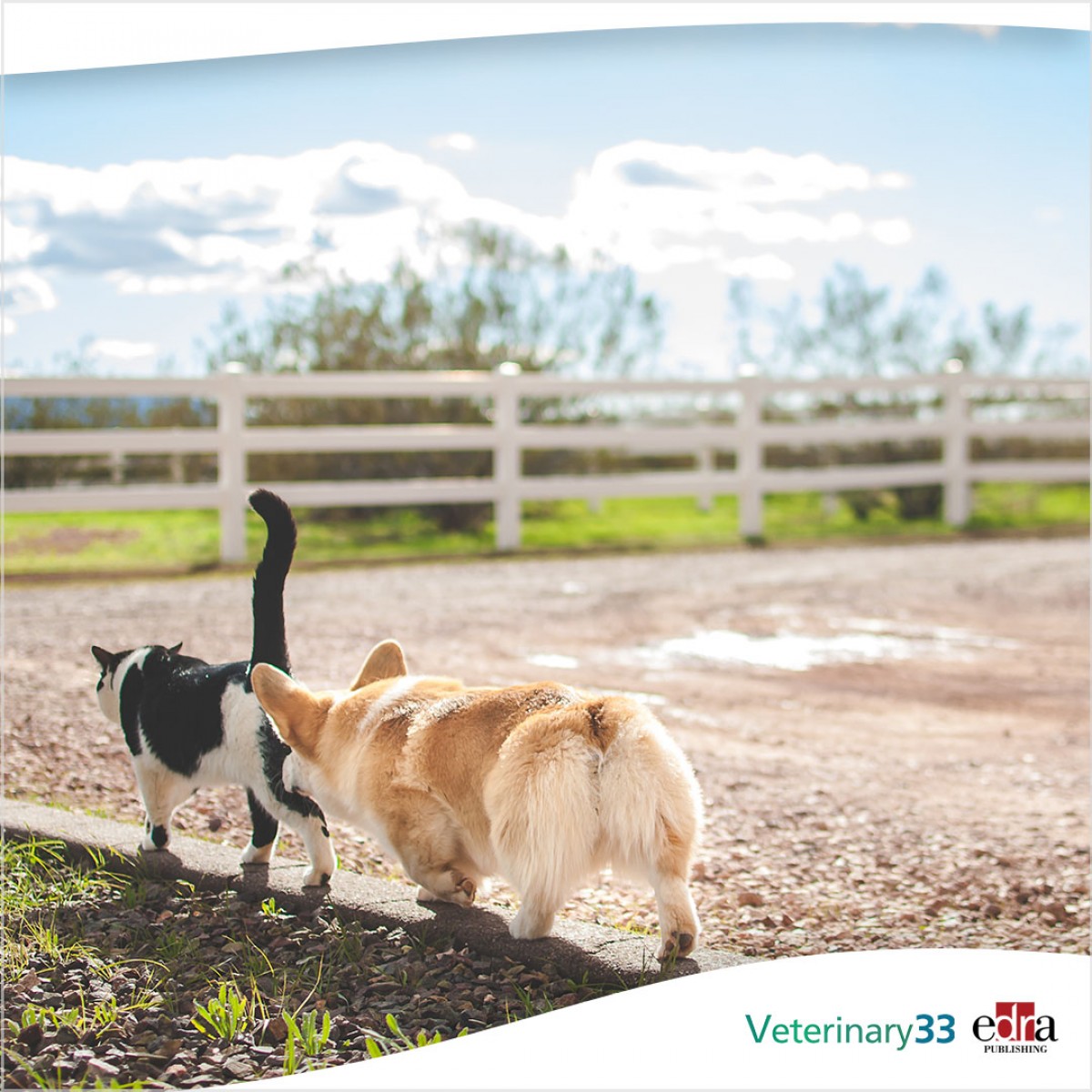

This article focuses on the pathogenic significance of Helicobacter species naturally colonizing the stomach of dogs, cats and pigs. These gastric "non-Helicobacter (H.) pylori Helicobacter species" (NHPH) are less well-known than the human adapted H. pylori. Helicobacter suis has been associated with gastritis and decreased daily weight gain in pigs.

Several studies also attribute a role to this pathogen in the development of hyperkeratosis and ulceration of the non-glandular stratified squamous epithelium of the pars oesophagea of the porcine stomach. The stomach of dogs and cats can be colonized by several Helicobacter species but their pathogenic significance for these animals is probably low. Helicobacter suis as well as several canine and feline gastric Helicobacter species may also infect humans, resulting in gastritis, peptic and duodenal ulcers, and low-grade mucosa-associated lymphoid tissue lymphoma.

These agents may be transmitted to humans most likely through direct or indirect contact with dogs, cats and pigs. Additional possible transmission routes include consumption of water and, for H. suis, also consumption of contaminated pork. It has been described that standard H. pylori eradication therapy is usually also effective to eradicate the NHPH in human patients, although acquired antimicrobial resistance may occasionally occur and porcine H. suis strains are intrinsically less susceptible to aminopenicillins than non-human primate H. suis strains and other gastric Helicobacter species.

Virulence factors of H. suis and the canine and feline gastric Helicobacter species include urease activity, motility, chemotaxis, adhesins and gamma-glutamyl transpeptidase. These NHPH, however, lack orthologs of cytotoxin-associated gene pathogenicity island and vacuolating cytotoxin A, which are major virulence factors in H. pylori. It can be concluded that besides H. pylori, gastric Helicobacter species associated with dogs, cats and pigs are also clinically relevant in humans.

Although recent research has provided better insights regarding pathogenic mechanisms and treatment strategies, a lot remains to be investigated, including true prevalence rates, exact modes of transmission and molecular pathways underlying disease development and progression.

“Gastric Helicobacter species associated with dogs, cats and pigs: significance for public and animal health”. Emily Taillieu, et al. Vet Res. 2022 Jun 13;53(1):42.  doi: 10.1186/s13567-022-01059-4.

Like0
Dislike0
  • Please enter a comment


Name *
Email address *
Comment *


* Required fields

Information on the processing of your personal data
We inform you that, in compliance with the provisions of current national and European regulations for the Protection of Personal Data and Services of the Information Society and Electronic Commerce, by sending us this form you are expressly giving your consent to Grupo Asís Biomedia , SL, (hereinafter, "ASIS GROUP") so that, as the person in charge, it may process your personal data in order to respond to your request for contact and information by electronic means.

Likewise, when you expressly consent, we will process your personal data to send you specialized information, newsletters, offers and exclusive promotions from GRUPO ASIS and related companies.

For the aforementioned purpose, GRUPO ASIS may transfer your data to other companies linked to GRUPO ASIS or to third party service providers for the management of electronic communications and other security services, even in cases where they are outside of the European Union, provided that they legally guarantee the adequate level of protection required by European regulations.

At any time you can withdraw the consent given and exercise the rights of access, rectification, deletion, portability of your data and limitation or opposition to its treatment by contacting GRUPO ASIS by sending an email to protecciondatos @ grupoasis.com, or by written communication to address at Centro Empresarial El Trovador, 8th floor, office I, Plaza Antonio Beltrán Martínez 1, 50002, Zaragoza (Spain), indicating in either case the Ref. Personal data and the right you exercise, as well as attaching a copy of your ID or replacement identification document.


I have read and accept the treatment of my data according to the informed purpose and according Legal notes and the Privacy Policy
I wish to receive commercial information from GRUPO ASIS and related companies


More news

Clinical outcomes and association with disease progression and survival of subclinical bacteriuria in cats with chronic kidney disease: a multicenter retrospective study.

Like0
Dislike1

Treatment of Canine Pemphigus Foliaceus, Pemphigus Vulgaris and Mucous Membrane Pemphigoid With Oclacitinib: A Retrospective Analysis of 21 Cases.

Like0
Dislike1

A Systematic Review and Meta-Analysis on the Global Seroprevalence of Porcine Reproductive and Respiratory Virus (PRRSV) in Pigs and Wild Boars: A Widespread and Impactful Swine Virus.

Like0
Dislike1

WSU seeks to curb deadly pneumonia threatening bighorn sheep recovery

Like0
Dislike1

Pet Insurance Market Could Exceed USD 113.7 Billion by 2035, as Rising Veterinary Costs and Expanding Insurance Penetration

Like0
Dislike1

Newsletter


News of interest

EVENTS

Copyright © 2026 - All Rights Reserved
ISSN 2768-198X

Top