

Public health alumna, center director guide road map for cancer prevention in Virginia
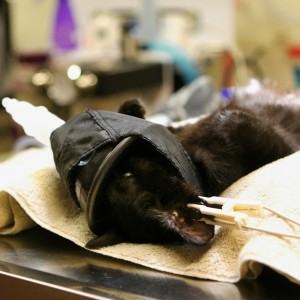
New university findings highlight potential implications for veterinary patients, cancer, and veterinary practice.

Jan Eberth , department head of Population Health Sciences at the veterinary college and a rural health and cancer prevention researcher as a professor of epidemiology and health services research and policy at Virginia Tech, has been tapped to be one of the subject matter experts in the study.
Nine years ago, Amanda Qadado '14, MPH '17 was a Virginia Tech public health graduate student helping compile data for the 2018-22 Virginia Cancer Plan.
Today, she is the comprehensive cancer control coordinator for the Virginia Department of Health, overseeing development and implementation of the state cancer plan, two iterations later.
“It truly is a full circle moment of having worked with the process at Virginia Tech, and now being able to work with Sophie in this collaborative way,” Qadado said.
“That we can continue this partnership between the VDH and Virginia Tech, and the fact that it's lasted multiple iterations, is just a beautiful thing.” “Sophie” refers to Sophie Wenzel , associate director of the Center for Public Health Practice and Research and an associate professor of practice in the Department of Population Health Sciences, within the Virginia-Maryland College of Veterinary Medicine , The center has received a $33,000 grant from the Virginia Department of Health for facilitation of developing the new cancer plan over a 14-month period.
The plan is a partnership between the health department and the Cancer Action Coalition of Virginia, a nonprofit that drives its development with federal funding support.
"It's a road map to help Virginia residents address the burden of cancer," Wenzel said.
“It’s setting the strategy for Virginia to address cancer in the state, and it's multi-pronged, so it really focuses on all the different aspects of cancer.” The cancer plan is organized around five focus areas: cancers specific to children and young adults.
Each section draws on roughly 10 to 15 subject-matter experts from across the state, and the coalition runs seven roundtables — including groups focused on breast, lung, colorectal, and pediatric cancers, along with patient navigation and HPV immunization — that turn the plan's goals into action on the ground.
Development of the new edition kicks off with a September meeting to review current progress and data needs, before Virginia Tech students spend the fall gathering updated data.
A larger meeting in February will bring the groups together to set new objectives and benchmarks, with final content due by next July.
The report adds to ongoing university-led research relevant to veterinary medicine, animal health, and clinical decision-making.
Source university website: Virginia-Maryland College of Veterinary Medicine
https://news.vt.edu/articles/2026/08/vetmed-cancer-prevention.html
 Comments
Related Articles





More news





Copyright © 2026 - All Rights Reserved
ISSN 2768-198X
List
Add
Please enter a comment