

Legacy fuels UWVC leadership in comprehensive cancer care
New university findings highlight potential implications for dogs, oncology, and veterinary practice.

“By bringing exceptional veterinarians and scientists together, we’re creating new possibilities for patients through cutting-edge clinical trials and treatments — momentum we will build on for years to come.” UWVC is one of just a handful of animal hospitals in the United States that is home to medical, radiation, and surgical oncologists, which means patients and their families have access to a wider range of treatment information and options than if they were being seen by a single specialty.
For 40 years, the UW School of Veterinary Medicine (SVM) and UW Veterinary Care (UWVC) have been leaders in veterinary oncology.
From the development of advanced radiation treatments to testing anti-cancer vaccines, UW Vet Med clinicians have long been on the front lines of redefining how cancer is treated.
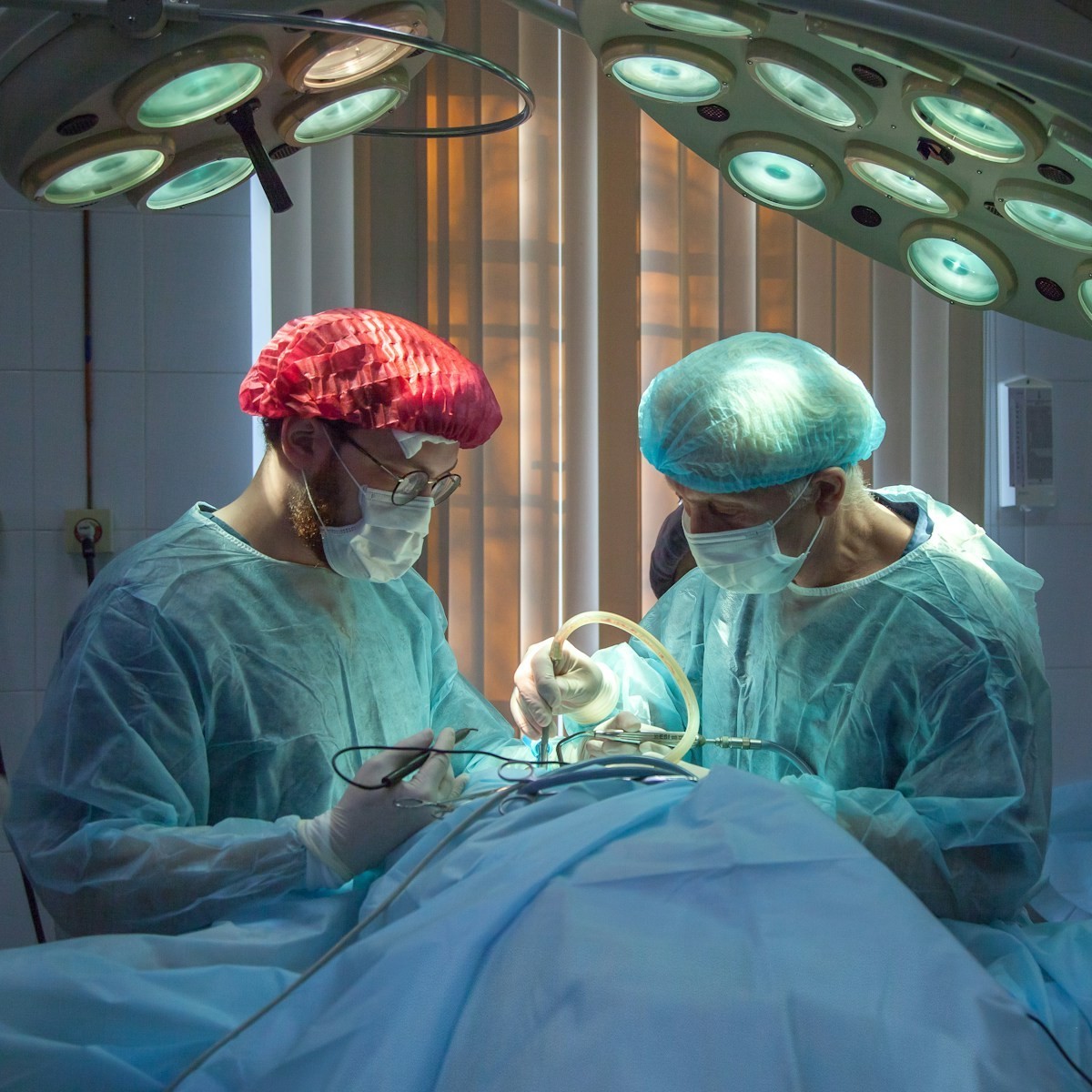
Today, the school continues to build on that legacy, bringing together medical, radiation, and surgical oncologists to form a comprehensive oncology service providing cancer care that is unmatched in Wisconsin and the upper Midwest.
“Our drive to revolutionize cancer care is unwavering,” says Dean Jon Levine .
And there is a pressing need for care — roughly 25% of dogs and 20% of cats will be diagnosed with cancer in their lifetimes.
The hospital’s comprehensive approach to cancer care — and its culture of collaboration across services — augments the ability of UWVC clinicians to treat the disease, says medical oncologist MacKenzie Pellin (’06 DVM’11; Dept.
Traditionally the entry point for most patients at UWVC, medical oncology is one pillar in the full spectrum of care from a unified, comprehensive care team.
“Now, radiation and surgical oncology see cases with us,” Pellin says.
“We all work together, and our integrated approach provides the best care possible for patients.” The importance of collaboration is underscored by earlier successes: The team made pioneering breakthroughs in radiation oncology, such as a now-widely used protocol for cardiac hemangiosarcoma — an aggressive cancer of blood vessels that affects the heart.
“It hadn’t been commonplace to use radiation for that, but we created a safe protocol and combined it with novel chemotherapy,” says radiation oncologist Michelle Turek (Dept.
The report adds to ongoing university-led research relevant to veterinary medicine, animal health, and clinical decision-making.
Source university website: University of Wisconsin School of Veterinary Medicine
https://www.vetmed.wisc.edu/legacy-fuels-uwvc-leadership-in-comprehensive-cancer-care/
 Comments
Related Articles







Copyright © 2026 - All Rights Reserved
ISSN 2768-198X
List
Add
Please enter a comment