

Becoming Veterinary A-“fish”-ionados in AQUAVET I
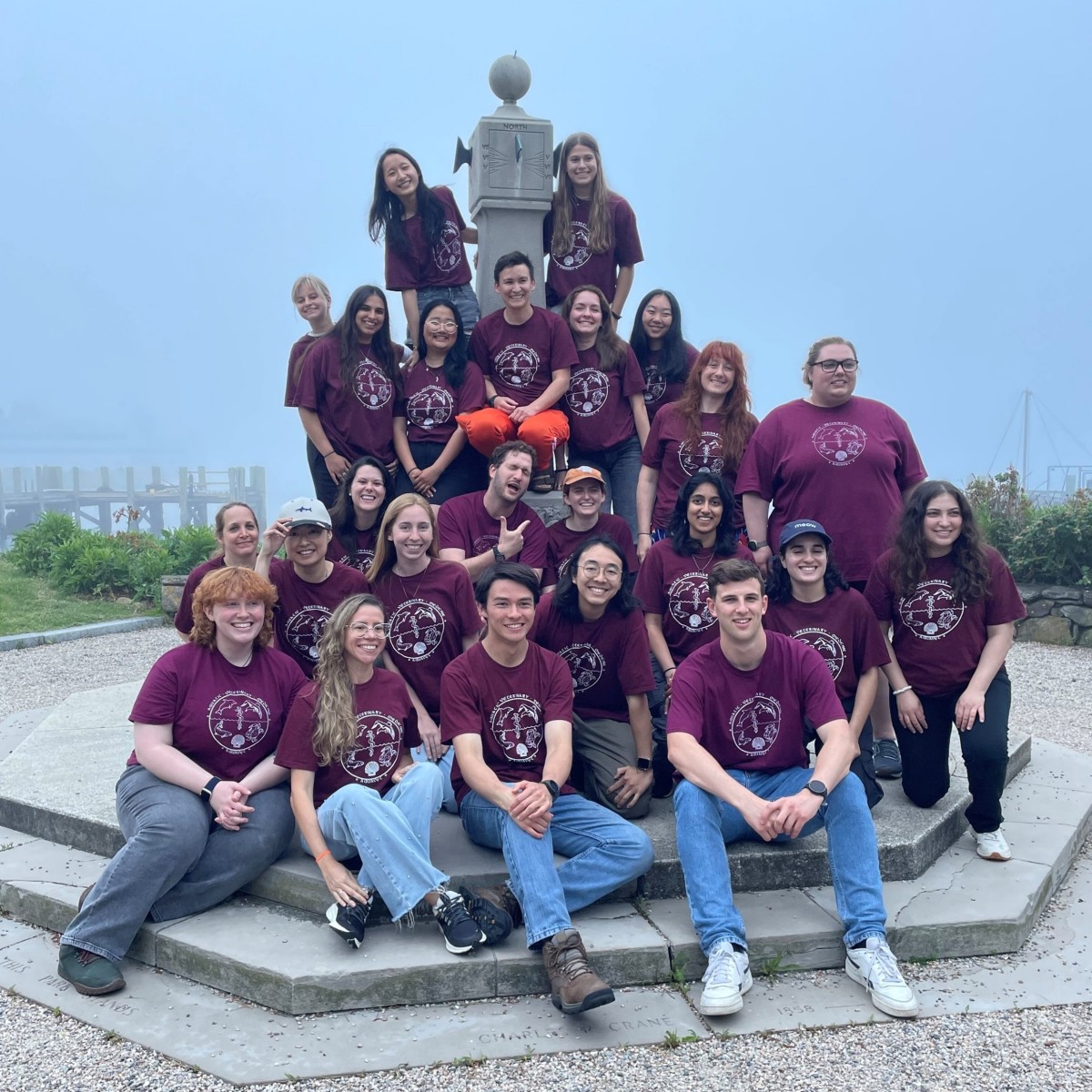
The AQUAVET® I program provides valuable hands-on experience in aquatic veterinary medicine to fill a critical gap in traditional veterinary curricula. Thanks to the Cornell K. Lisa Yang Center for Wildlife Health Student Support Fund, seven Cornell University College of Veterinary Medicine (CVM) students had the opportunity to attend this incredible program this summer.
AQUAVET I was held over the course of four weeks at Roger Williams University in Bristol, Rhode Island, and included countless lectures, wet labs, and field trips that covered all topics of aquatic veterinary medicine, from shorebirds to aquaculture.
The program provides the opportunity to develop clinical skills and knowledge necessary for our long-term goals of becoming aquatic animal veterinarians. Through experiential learning in fish health management, marine mammal necropsies, and aquatic diagnostics, we gained practical experiences that directly apply to zoo and aquatic veterinary medicine. Additionally, the program’s focus on pathology, regulatory medicine, and aquaculture broadened our understanding of the complex health challenges facing aquatic species in both captive and wild environments. By preparing future veterinarians to tackle emerging threats like climate change, pollution, and zoonotic disease, AQUAVET makes meaningful contributions to global efforts in ecosystem and public health.
This experience allowed us to engage with veterinarians from many establishments that are leaders in research and animal care for aquatic species, including Mystic Aquarium, New England Aquarium, Long Island Aquarium, Georgia Sea Turtle Center, Woods Hole Oceanographic Institute, and more. Through this program, we gained valuable perspectives on marine mammal care, fish medicine, and advancements in sea turtle rehabilitation. Additionally, we gained experience through hands-on labs, including sea turtle dissections, fish clinical skills, and marine mammal necropsy. These experiences have strengthened our commitment to pursuing aquatic animal health and conservation.
Invertebrates
AQUAVET I helped us to build a strong foundation in invertebrate anatomy, physiology, diseases, and management, and we applied this knowledge through hands-on experiences in the lab and field.
A memorable moment was conducting an invertebrate collection along the rocky shore near Roger Williams University and discovering a variety of lifeforms we might otherwise have missed. The collected organisms were brought to the laboratory, where we viewed them under microscopes. We examined sea stars, slipper limpets, sea urchins, various crustaceans, pipefish, sponges, and the diverse fauna and flora that form complex microecosystems on larger organisms. After our exploratory examinations, these organisms were released back to the locations where they were originally found.
We also learned about the importance of coral reefs as vital providers of ecosystem services and how they are increasingly threatened by climate change. The program introduced current techniques used in reef restoration and coral disease prevention, as well as areas where these strategies can be improved to better conserve these unique organisms and the ecosystems they build.
As part of the unit on invertebrates, we also explored the evolving field of aquaculture, focusing on shrimp farming and its global importance. These sessions emphasized how aquatic food production has become a critical source of nutrition and income worldwide, and highlighted the essential role of veterinarians in promoting animal health, sustainability, and environmental responsibility within aquaculture systems.
Water Quality Labs
As part of AQUAVET I, we participated in water quality and fish surgery labs. In preparation for our water quality lab, instructors displayed three wild-caught American lobsters in three tanks with differing filtration systems and substrates. We practiced testing water quality using LaMotte® Water Test Kits to assess the ability of these varied tank designs to regulate ammonia, nitrate, and pH levels. As a group bonding activity, we released our specimens back into Mount Hope Bay by our dorms the same evening. This lesson about water quality measurements later helped us problem-solve when Dr. Jesse Sanders, head veterinarian and owner of Aquatic Veterinary Services, and Dr. Jan Lovy, research biologist at the USGS Western Fisheries Research Center, presented real cases involving pet fish and unusual mortality events in wild fish populations during their lectures.
Field Trips to the Aquaria
Roger Williams University served as a great home for most of our activities, but we also had the opportunity to extend our learning beyond campus and get behind-the-scenes experiences at three incredible aquaria: Mystic Aquarium in Connecticut, Long Island Aquarium in New York, and New England Aquarium in Massachusetts.
At Mystic Aquarium, we met the veterinary team and learned how to perform an exam on a penguin. We also met the training team for the California sea lions and beluga whales, who demonstrated how the animals’ trained behaviors are used for medical exams, treatments, and research projects.
After a great morning and afternoon at Mystic Aquarium, we drove onto the ferry and made our way to Long Island. There, we met Joe Yaiullo, Long Island Aquarium curator and cofounder, who gave a lecture on coral health and his process of curating one of the largest all-living, closed-system coral reef displays in the Western hemisphere. One of the highlights of our visit was learning coral fragmentation techniques (cutting coral apart into smaller pieces that can then be used to grow new colonies), and we all left wanting to start our own coral tank.
The next morning, we returned to the aquarium and met up with their veterinary staff in the penguin pen. Using the skills learned during the penguin exam demonstration at Mystic Aquarium, we performed our own physical exam on a few of the penguins on exhibit, including Princess, the first chick hatched at Long Island Aquarium. For almost all of us, this was our first time directly interacting with a penguin! The veterinarian also demonstrated how to perform a blood draw on a penguin that needed a work-up. After lunch, we had a brief lecture by the New York Marine Rescue Center, which operates out of the aquarium. We then had the incredible opportunity to perform physical exams and blood draws on seven rehabilitated harbor seals as part of their final check before release. That evening, we made the drive back to Rhode Island, knowing we still had one more aquarium to look forward to the following week.
Not wanting to face the challenge of finding parking in Boston, we all boarded a bus early one morning and headed down to the New England Aquarium. There, we met with the veterinary staff, who guided us through roughly twenty different areas in a maze-like path behind the public exhibits. We had the opportunity to see holding tanks for animals receiving medical care, lab space for performing necropsies and storing samples, the radiograph machine with a penguin box for standing radiographs, the surgery room with special additions for flowing water over the patient, and many more of their facilities.
For many of us, it was our first time visiting these aquaria, but for some, it was a homecoming back to where they’d volunteered and first discovered their love for aquatic veterinary medicine. Regardless, these field trips allowed us to gain insights into what’s really involved in running an aquarium, and the role veterinarians play—giving us a hopeful glimpse into a potential future career path.
Student Seminars
One of the hallmarks of the AQUAVET I program is the lectures from some of the most influential veterinarians in the field of aquatic veterinary medicine. Equally if not more important are the student seminars, during which each member of the program is given a chance to speak on a topic of their choosing related to aquatic veterinary medicine.
The topics covered during these seminars were as varied as the unique individuals within the class, and provided the opportunity for each of us to learn about new species, conservation issues, medical techniques, and aspects of the field we may not have considered before. These presentations also gave us insights into who our classmates were as individuals—what their passions were, interesting work they’d done—heightening our connections with each other.
Looking Ahead
Beyond technical skills, the AQUAVET I program connected us with leading experts in the field, offering mentorship and networking opportunities that will shape the trajectory of our careers. Engaging with professionals at the forefront of aquatic veterinary medicine exposed us to the latest research, innovative patient treatment strategies, and conservation initiatives aimed at addressing emerging threats to aquatic species. These experiences have enhanced our ability to integrate aquatic animal health into broader conservation efforts. AQUAVET has equipped us with the clinical, diagnostic, and conservation-focused skills necessary for future internships, residencies, and ultimately a career dedicated to protecting and advancing the health of aquatic species.
Authors: Amy Yang, DVM ‘27, Rosemary Sun, DVM ‘28, Mads Walters, DVM ‘28, Clare Wang, PhD Student, DVM ‘32, Keertti Sinnan, DVM ‘28, Ishita Monga, DVM ‘27, Katie Johnson, DVM ‘28
Source: https://wildlife.cornell.edu/
 Comments
Related Articles
More news

Copyright © 2026 - All Rights Reserved
ISSN 2768-198X
List
Add
Please enter a comment