

Fish farming is booming in Lake Victoria, but pollution and disease are wiping out millions. How to reduce losses
Aquaculture – the farming of fish and other aquatic organisms – is the world’s fastest-growing food production system.
The sharpest growth in aquaculture is happening in Africa. Average annual growth rates have exceeded 10% in recent years measured by production value.
Over the past 10 years in Lake Victoria, shared between Kenya, Uganda and Tanzania, aquaculture has transformed from a small-scale enterprise into a vast and diverse commercial industry.
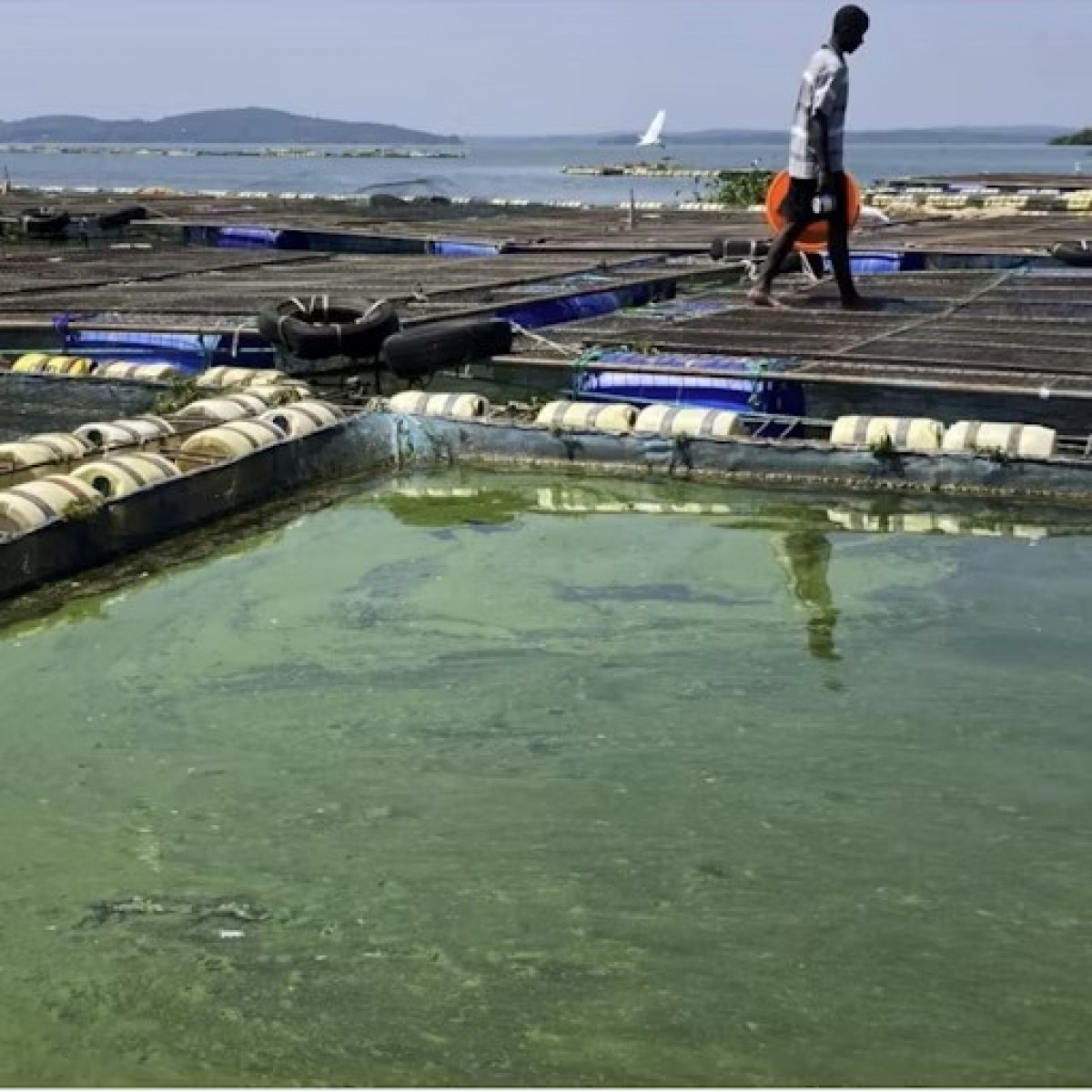
Lake Victoria is the world’s second-largest freshwater lake by surface area. Cage aquaculture, the farming of fish within cages, has expanded rapidly in the lake. The cages are made of nets in frames, and are mostly stocked with Nile tilapia. The number of fish in a cage farm varies from tens to hundreds of thousands. The sector accounts for about 25% of the fish Kenya produces.
These cage farms support the nutrition and livelihoods of more than 40 million people in the lake’s basin.
We are environmental scientists who study biological threats to public health. From our research, we have found that this industry faces two interconnected challenges: large-scale fish deaths; and resistance to the drugs used to treat diseased fish.
Repeated, large-scale die-offs are known as fish kills. They involve the rapid death of hundreds of thousands, or sometimes millions, of fish within a few days. Many farmers who find dead fish in their cages simply toss them into the lake, where they can easily wash up against another cage and transmit disease.
Farmers and fish health professionals often use antimicrobials, which are drugs like antibiotics, to manage and treat infectious diseases. But antimicrobial resistance is a rising threat. A misuse of these drugs is fuelling the emergence of resistant bacteria, making treatments ineffective.
Because of the scale of these problems, we set out to systematically examine both the causes of mass fish deaths and the spread of antimicrobial resistance in Lake Victoria’s cage aquaculture industry.
Our study was conducted in Kenya. We found that fish deaths in Lake Victoria’s tilapia industry are likely driven by water quality problems. These include low oxygen levels, pollution and harmful algal blooms. Algal blooms refer to the rapid growth and subsequent decomposition of algae. This can lead to the release of toxins and rapid drops in dissolved oxygen levels.
These water quality problems create openings for infectious bacteria to thrive.
To address this, we suggest:
- stronger disease reporting systems to enable a prompt response from industry authorities
- improved diagnostics to determine the cause of fish mortalities
- clear guidelines for antimicrobial use among farmers.
Without these interventions, the sustainability of a rapidly growing industry – and the food security of millions in east Africa – remains at risk.
Our findings
Our study surveyed 172 cage farm operations. These were across the five Kenyan counties in Lake Victoria (Kisumu, Siaya, Busia, Homa Bay and Migori).
We surveyed cage farmers’ perceptions and responses to fish kills. We also carried out a rapid-response investigation of a mass tilapia mortality event, and disease surveillance. Finally, we tested the antimicrobial resistance of identified bacterial pathogens.
Between 2020 and 2023, the farmers in our study reported 82 large-scale fish kill events in Lake Victoria, with more than 1.8 million tilapia dying.
These events had major economic consequences, but reporting and treatment were limited.
We found that only 39% of farmers informed the relevant Kenyan authorities. These include the Kenya Marine and Fisheries Research Institute, Kenya Fisheries Service and county fisheries offices.
Just 17% attempted treatment. This usually included applying salt to the water without obtaining a diagnosis. This points to gaps in reporting systems and access to fish health services.
Farmers mostly attributed fish deaths to poor water quality. Nearly 90% perceived links to changes in water colour and smell, high temperatures or algal blooms.
Harmful algal blooms happen when phytoplankton (tiny organisms in the water) quickly multiply and then decompose. These blooms produce dangerous toxins and can rapidly lower the levels of dissolved oxygen in the water. They can lead to fish deaths, and can affect human health if people eat contaminated fish or drink the water.
Harmful algal blooms in Lake Victoria are driven by the runoff from industries and the excessive use of fertilisers.
A smaller number of farmers cited human activities like stocking, handling or pollution.
Very few directly associated mortalities with disease. This probably reflects limited training to recognise clinical signs of infection.
Our rapid-response investigation of a major fish kill in Busia County supported these observations. On arrival, we found discoloured, foul-smelling water. There were floating dead molluscs and low dissolved oxygen levels, conditions typical of harmful algal blooms.
From freshly deceased tilapia, we isolated three bacterial pathogens: Aeromonas jandaei, Enterobacter hormaechei and Staphylococcus epidermidis. These opportunistic pathogens often cause disease secondary to a primary stressor, such as poor water quality or rough handling.
This was the first time bacterial pathogens were successfully identified from a fish kill in Lake Victoria.
We found that bacterial tilapia pathogens were more commonly found within cage farms with clogged cage nets, likely because the nets reduce water circulation and worsen cage water quality.
Finally, antimicrobial resistance testing revealed resistant strains among the bacterial samples.
These results can guide veterinarians and policymakers in making decisions about antimicrobial use in aquaculture.
What next
Our findings point to a central conclusion: opportunistic pathogens are widespread in Lake Victoria. And fish disease outbreaks are often driven by poor water quality.
Action is needed at multiple levels.
At the landscape scale, nutrient runoff into the lake must be reduced. This requires improving sanitation infrastructure and promoting more efficient fertiliser use in agriculture. This will help prevent harmful algal blooms.
Fish farmers can:
- set up cages in deeper waters with better circulation
- keep cage nets clean to allow water flow
- dispose of dead fish by composting or burning rather than throwing them back into the lake
- rapidly report mortality events so authorities can investigate
- improve feeding practices, such as using high-quality feed and avoiding overfeeding, to reduce nutrient loading into the lake.
A One Health approach, which recognises the interconnectedness of human, animal and environmental health, is important for the sustainability of Lake Victoria’s aquaculture.
This means monitoring water quality and pollution, and establishing cross-sectoral collaborations for rapid disease response. Farmers also need training.
Improved production practices can decrease the need for antibiotics in the first place. Coordinated monitoring systems and cross-sectoral collaboration can help promote their responsible use.
Authors: Ekta Patel, Christopher Aura, Eric Teplitz, Kathryn Fiorella
Source: https://theconversation.com/
 Comments
Related Articles




More news






Copyright © 2026 - All Rights Reserved
ISSN 2768-198X
List
Add
Please enter a comment