

Antiviral Effect of Saccharomyces cerevisiaeβ-glucan to Swine Influenza Virus by Increased Production of Interferon-γ and Nitric Oxide
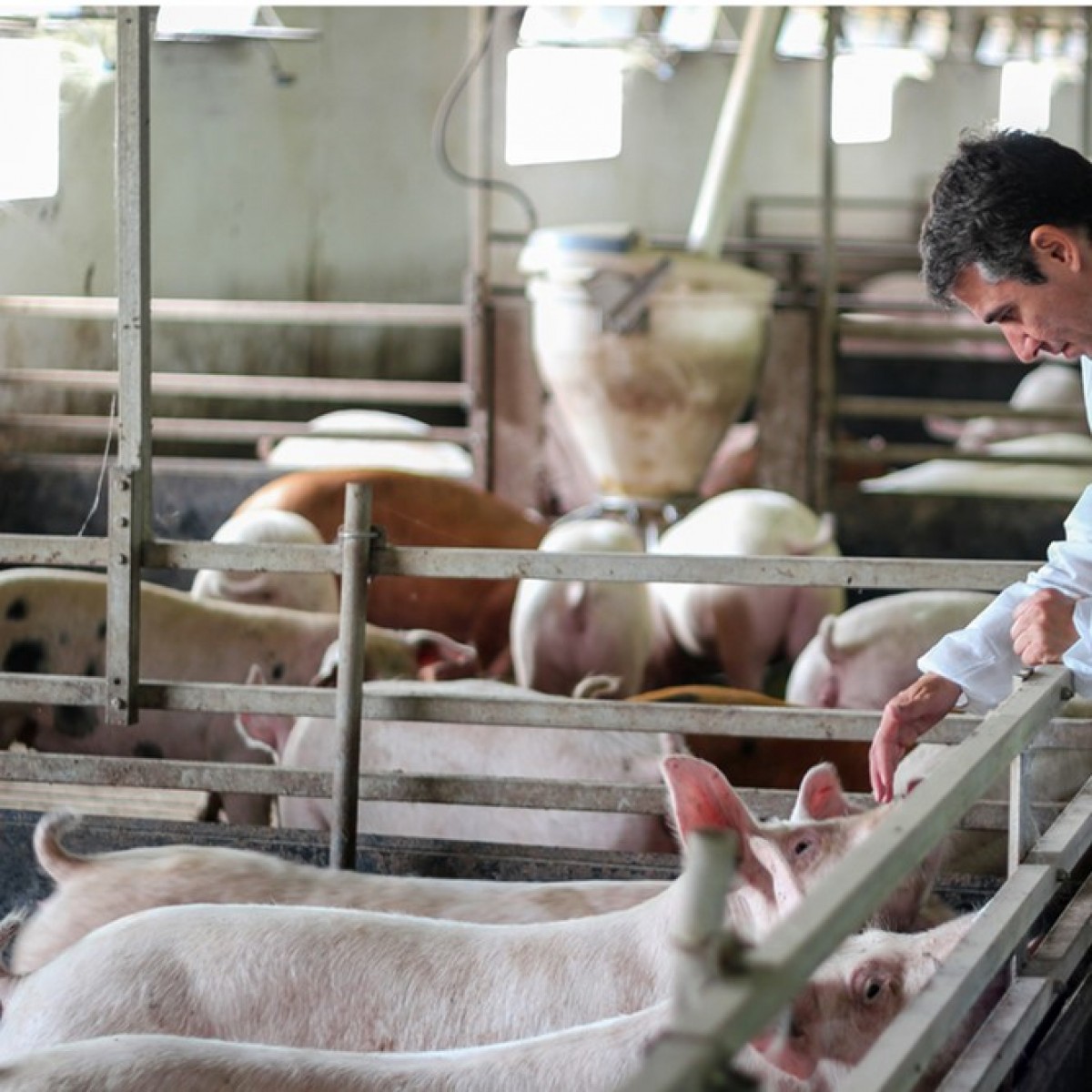
The aim of these experiments was to investigate the potential antiviral effect of Saccharomyces cerevisiaeβ-glucan on the pneumonia induced by swine influenza virus (SIV).
Forty colostrum-deprived 5-day-old piglets were randomly divided into four groups of 10. The 20 pigs in groups 1 and 2 were administered Saccharomyces cerevisiaeβ-glucan orally (50 mg/day/pig; En-Bio Technology Co., Ltd) for 3 days before SIV infection and those in groups 3 and 4 were given culture medium/diluent alone.
Groups 1 and 3 were inoculated intranasally with 3 ml of tissue culture fluid containing 2 × 10⁶ tissue culture infective doses 50% (TCID50)/ml of SIV and those in groups 2 and 4 were exposed in the same manner to uninfected cell culture supernatant. The microscopic lung lesions induced by SIV infection (group 1 pigs) were significantly more severe than those induced by infection in animals pre-administered β-glucan (group 3) (P < 0.05). Significantly more SIV nucleic acid was detected in the lungs of pigs experimentally infected with SIV only (group 1) at 5, 7 and 10 days post-inoculation (dpi) compared with lungs from pigs pre-administered β-glucan and infected with SIV (group 3) (P < 0.05).
The concentrations of interferon-γ (IFN-γ) and nitric oxide (NO) in bronchoalveolar lavage fluid from pigs pre-administered β-glucan and infected with SIV (group 3) were significantly higher than for any other group at 7 and 10 dpi for IFN-γ, and at 5, 7 and 10 dpi for NO (P < 0.05).
Saccharomyces cerevisiaeβ-glucan reduced the pulmonary lesion score and viral replication rate in SIV-infected pigs. These findings support the potential application of β-glucan as prophylactic/treatment agent in influenza virus infection.
Authors: K. Jung, Y. Ha, S.-K. Ha, D. U. Han, D.-W. Kim, W. K. Moon, C. Chae
Source: https://onlinelibrary.wiley.com/
 Comments
Tag
Related Articles


More news



Copyright © 2026 - All Rights Reserved
ISSN 2768-198X
List
Add
Please enter a comment