Equine habronemiasis, caused by Habronema (H.) muscae, H. microstoma, and Draschia megastoma, is a parasitic disease that presents in both gastric and cutaneous forms.
In the past, veterinarians have participated in interprofessional collaboration to support the health promotion and disease prevention goals and objectives described in the United States Department...
Zoetis Inc. today announced that the Committee for Veterinary Medicinal Products (CVMP) of the European Medicines Agency (EMA) has adopted a positive opinion recommending the granting of marketing...
The Institute of Clinical Research (The ICR) is delighted to announce the launch of its Company Membership Scheme, an initiative designed to strengthen professional development and collaboration...
Penn Climate Insights, a new website platform for sharing and acquiring trusted information about climate knowledge and related research, is now accessible to the entire University of Pennsylvania...
Antimicrobial resistance is of growing concern in human and animal health. The aim of this study was to raise awareness and perception of risk of infection-related behaviours during routine...
Although novel agents hold great promise for the treatment of animal neoplasia, there may be room for significant improvement in the use of currently available agents.
PurposePrevious studies using FLASH radiotherapy (RT) in mice showed a marked increase of the differential effect between normal tissue and tumors. To stimulate clinical transfer, we evaluated...
Due to their value as a food source, fiber, and other products globally, there has been a growing focus on the wellbeing and health of small ruminants, particularly in relation to anemia induced by...
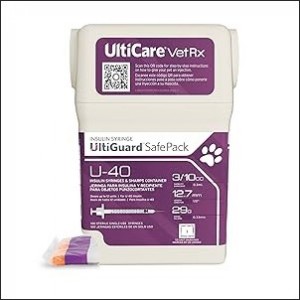
UltiMed, Inc., the maker of the #1 vet-recommended insulin syringe, is proud to announce the launch of UltiCare® VetRx General Syringes—a new line of high-performance syringes developed to meet...
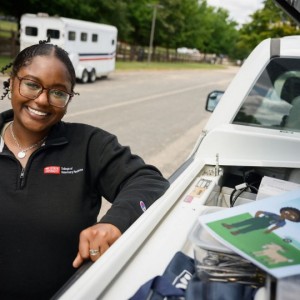
Third-year veterinary student Azariah Spurlock, a West Virginia native, offers her interactive ‘Ride Along with Dr. Ag’ book to help schoolchildren see that anyone can be a veterinarian — and...
Increasing numbers of dogs and cats with cancer are treated with stereotactic radiosurgery, stereotactic radiation therapy or stereotactic body radiotherapy (SRS, SRT or SBRT).






.jfif)