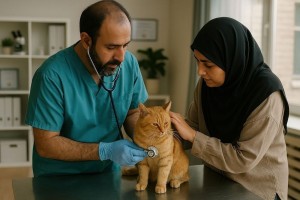
A total of 12 clinically ill cats previously diagnosed as feline infectious peritonitis (FIP) were treated with a combination of recombinant feline interferon and glucocorticoid.
Factors relating to the incidence of canine mammary tumours are reviewed. Increased age, intact status or ovariectomy after 2.5 years of age, as well as progestagen treatment, can all lead to an...
Canine brain tumours are becoming established as naturally occurring models of disease to advance diagnostic and therapeutic understanding successfully.
In the past, veterinarians have participated in interprofessional collaboration to support the health promotion and disease prevention goals and objectives described in the United States Department...
Antimicrobial resistance is of growing concern in human and animal health. The aim of this study was to raise awareness and perception of risk of infection-related behaviours during routine...
Due to their value as a food source, fiber, and other products globally, there has been a growing focus on the wellbeing and health of small ruminants, particularly in relation to anemia induced by...
Although novel agents hold great promise for the treatment of animal neoplasia, there may be room for significant improvement in the use of currently available agents.
Increasing numbers of dogs and cats with cancer are treated with stereotactic radiosurgery, stereotactic radiation therapy or stereotactic body radiotherapy (SRS, SRT or SBRT).
The 3Rs principle of replacing, reducing and refining the use of animals in science has been gaining widespread support in the international research community and appears in transnational...