

Simple Blood Tests May Predict Response to Lymphoma Treatment
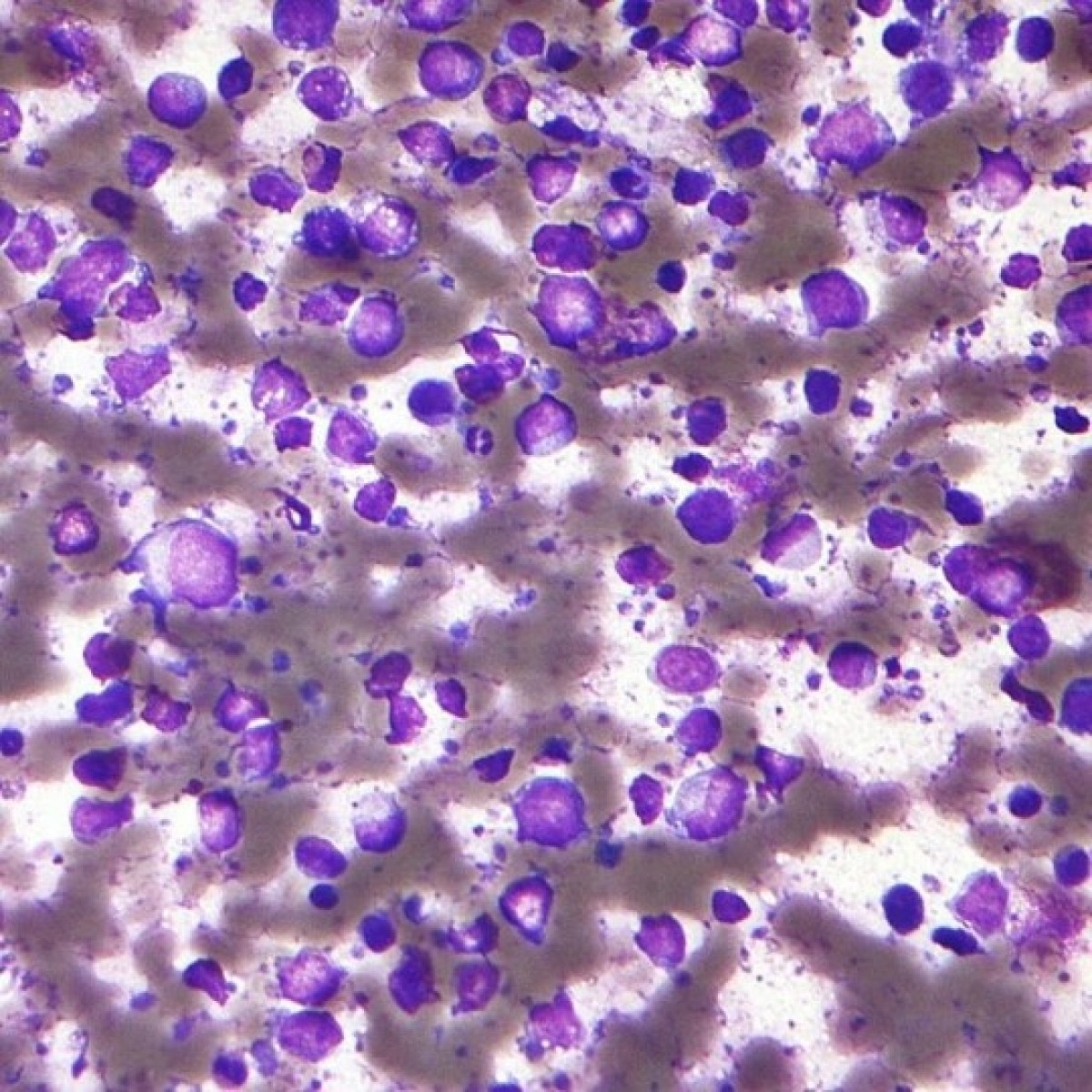
Many people with an aggressive blood cancer called diffuse large B cell lymphoma are cured by the current gold standard of treatment: an antibody designed to wipe out cancerous B cells plus a combination of four chemotherapy drugs. However, this treatment regimen fails in about three in 10 patients, and its intense chemotherapy can cause heart damage—a serious risk for older patients, who make up a large share of those diagnosed.
Despite these risks, clinicians are often reluctant to try newer, potentially less-toxic treatment regimens, because there’s no reliable way to predict whether a patient’s cancer will respond.
A new study in pet dogs treated with promising novel treatment regimens for the same cancer suggests that immune signatures found in blood samples could help identify poor responders early. The findings, published today in Scientific Reports, point toward a future in which blood tests could help guide more personalized treatment decisions in both veterinary and human cancer care.
For the study, researchers from Cummings School of Veterinary Medicine at Tufts University and UMass Chan Medical School analyzed blood samples collected during a previous clinical trial involving pet dogs being treated for diffuse large B cell lymphoma.
In that trial, dogs were randomly assigned to one of three new treatment regimens. Each regimen combined a canine antibody equivalent to the one used in human medicine plus a low dose of doxorubicin, one of the four traditional chemotherapy drugs—a gentler version of the gold standard of care—followed by one of three experimental immune-boosting therapies. (Two of those new immunotherapies are now also being tested in humans.)
Rather than focusing on tumor tissue, the team examined gene activity in immune cells circulating in the dogs’ blood—a noninvasive approach similar to “liquid biopsies” increasingly used in human and veterinary oncology. Blood samples were analyzed at several key points: before treatment with the antibody and chemotherapy began; seven days into the treatment regimen and just before administering the novel immunotherapy; at the end of the chemo-immunotherapy cycle; and, finally, either when the cancer returned or at 400 days post-treatment if the dog stayed cancer-free.
The researchers then compared gene activity patterns between dogs whose cancer returned quickly and those who survived much longer after treatment.
“Many of today’s cancer treatments are designed to boost the immune system so it can help eliminate the tumor,” said Jillian Richmond, Ph.D., an assistant professor of comparative pathobiology at Cummings School and one of three senior authors on the study. “What we found was that certain immune-related genes circulating in the blood were linked to either a good or a poor response to treatment.”
“What we found was that certain immune-related genes circulating in the blood were linked to either a good or a poor response to treatment.”
The researchers found that activity in two genes, CD1E and CCL14, was linked to long-term survival. CD1E helps deliver molecular signals that enable T cells to better recognize and attack cancer, while CCL14 acts like a chemical beacon, helping recruit immune cells to where they’re needed.
Richmond said this suggests the two genes could serve as blood-based markers of a more effective immune response to therapy. The researchers found that it did not seem to matter which immunotherapy the dogs received; instead, outcomes appeared to depend more on whether the immune system was already exhausted before treatment began.
One of the most surprising findings involved interferon-stimulated genes, which were consistently linked to worse outcomes in the dogs, including shorter survival times and early relapse. “Interferon is a type of cytokine, a protein that immune cells use to talk to each other and coordinate their responses,” Richmond explained. “Historically in oncology, we’ve thought of interferon responses largely as protective, because they tell the immune system to fight cancer.”
“But our results suggest that in a blood cancer like lymphoma, some interferon-related signals may actually be harmful,” she said. “We suspect that, in this context, they may be helping cancerous blood cells survive or continue to rapidly reproduce.”
The team also identified three genes—TBHD, NPNT, and ISG20—whose activity just one week into treatment appeared to predict a poor outcome. Co-senior author Heather Gardner, D.V.M., Ph.D., DACVIM, GBS20, assistant professor and Usen Family Career Development Professor at Cummings School, developed a simple laboratory test that could detect elevated activity among these genes associated with poorer survival.
The findings suggest that a rapid blood test early in treatment could help flag dogs at higher risk of cancer recurrence, allowing veterinarians to adjust treatment sooner. Co-senior author Cheryl London, D.V.M., Ph.D., DACVIM, V90, Anne Engen and Dusty Professor in Comparative Oncology at Cummings School, plans to evaluate whether using this blood test to guide treatment decisions can ultimately improve survival in dogs with lymphoma.
“Our long-term goal is to leverage the data we are generating in dogs with lymphoma to develop new diagnostics and therapeutic combinations that can be successfully translated into human lymphoma patients to reduce treatment-related toxicities and improve outcomes,” said London.
Author: Genevieve Rajewski
Source: https://now.tufts.edu/
 Comments
Related Articles




More news





Copyright © 2026 - All Rights Reserved
ISSN 2768-198X
List
Add
Please enter a comment