

Joyful send-off for legendary biomedical sciences professor
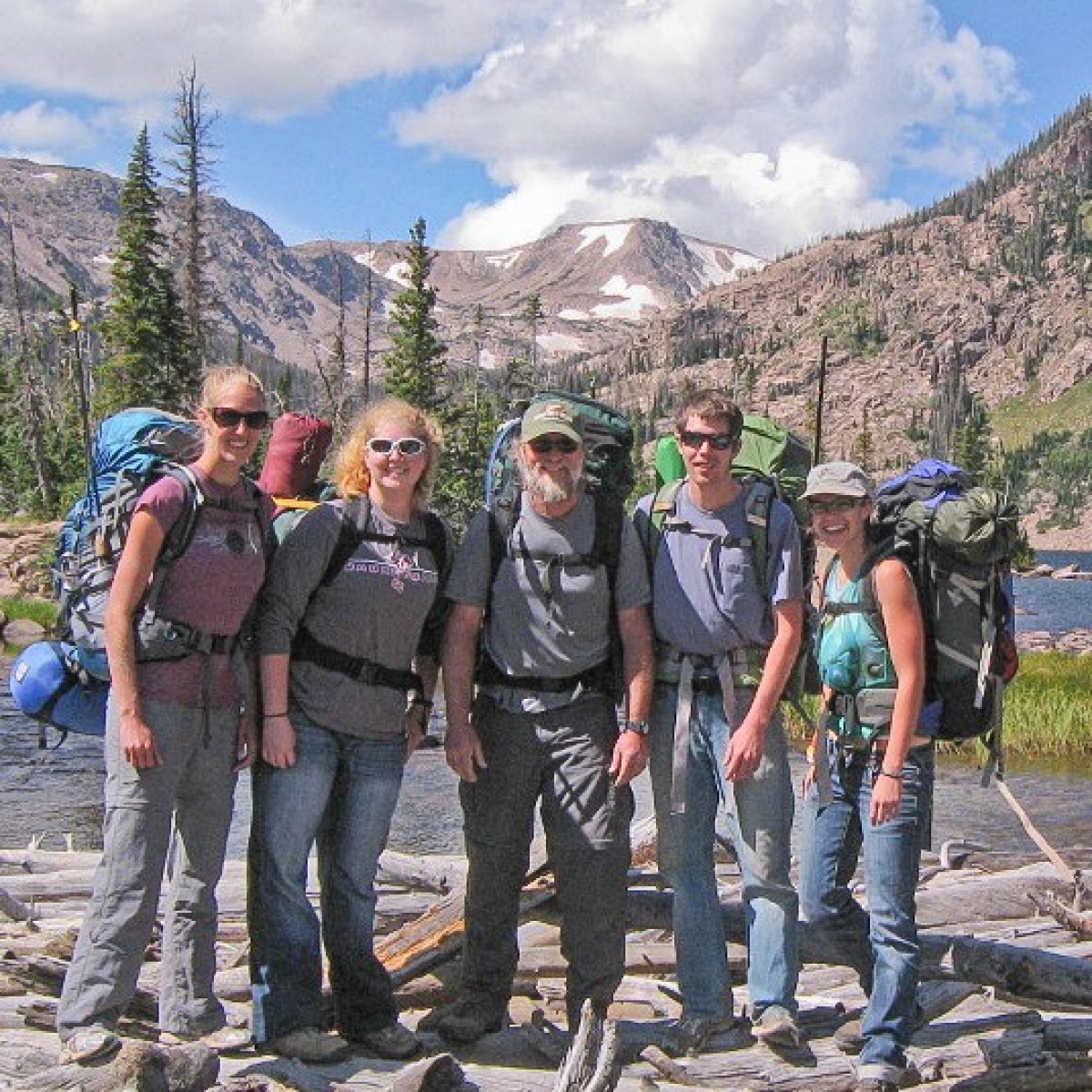
There were heartfelt speeches, a few tears, and plenty of laughs.
Colleagues, scientists, and students from around the country and internationally gathered today for a special retirement celebration symposium in honor of Biomedical Sciences Professor Mike Tamkun, who is retiring from CSU after almost 29 years.
Nearly 20 speeches and talks were given to a packed audience, reflecting on the impact Tamkun and his significant body of work has had on so many over the course of his career.
“Dr. Tamkun has published more than 100 papers, managed more than 40 National Institutes of Health and other grants totaling more than $12 million, and has made real contributions to the field of neuroscience, particularly in his research in ion channel molecular physiology,” said Sue VandeWoude, dean of the College of Veterinary Medicine and Biomedical Sciences. “At this university, where one of our main missions is education and teaching, he has made a tremendous impact mentoring over 100 students from the undergraduate to postdoctoral level, many of whom have gone on to do amazing things in their careers. He has also contributed his razor-sharp insights about programmatic and departmental growth and futures, provided invaluable and persistent leadership during departmental restructuring, and has always cared deeply about the strength and vitality of the department and college.”
Tamkun is equally renowned for his dedication to educating students and nurturing the careers of his trainees and colleagues as he is for being an exemplary researcher.
“Dr. Tamkun is known for being transparent, supremely honest, straightforward, and deeply passionate and compassionate,” said Colin Clay, professor and executive associate dean of the College of Veterinary Medicine and Biomedical Sciences. “He is also one of the best teachers and advisers I’ve ever seen—in class he is always prepared and engaging. As an adviser, his commitment to his students and lab personnel is unparalleled.”
Tamkun joined what was then the Physiology Department in July 1997, which soon after merged with Anatomy and Neurobiology to form the current Department of Biomedical Sciences.
Before moving to Fort Collins, Tamkun was a tenured Professor in molecular physiology and biophysics at Vanderbilt Medical School, where he served as faculty for 10 years.
Despite having great colleagues at Vanderbilt and its strong academic environment, Tamkun was intrigued by CSU due to Kurt Beam’s work on muscle excitation-contraction coupling. He found Beam’s work so impressive that when he saw the job ad for a faculty position at CSU, he applied, not thinking he would actually make the move. After interviewing, he was impressed by the senior faculty and a few other new hires, enjoyed the campus’ down-to-earth undergraduate population, and was drawn to Fort Collins for its outdoor recreation opportunities and family-friendly environment for his four children.
“My best memories of my time at CSU can be placed into three general categories,” said Tamkun. “The first involves training people in the laboratory which included undergraduate researchers, graduate students, and postdoctoral fellows. I am happy to have interacted with so many talented and highly motivated people, almost all of which are highly successful today. The next area that I will remember fondly is undergraduate instruction, especially in my BMS 405 Nerve and Muscle: Toxins, Trauma, and Disease class. I learned a lot from the students in this class and appreciated their candor when they relayed their personal life experiences to the entire classroom. Lastly, it has also been a great pleasure to have worked with talented faculty in Biomedical Sciences, Biochemistry, and Engineering—I thank all the colleagues and students that have made these years both enjoyable and memorable.”
It is an understatement to say that Dr. Tamkun will be missed by all those whose lives and careers he has influenced in his time here at CSU.
“Dr. Tamkun is highly respected, not because of his seniority or his position, but because of his credibility in essentially every aspect of his professional work, from paradigm-shifting research to teaching,” said Clay. “Throughout his career, he fully exemplified the concept of scientific integrity.”
Author: SOURCE Contributor
Source: https://cvmbs.source.colostate.edu/
 Comments
Related Articles




More news


Copyright © 2026 - All Rights Reserved
ISSN 2768-198X
List
Add
Please enter a comment