

Gene therapy approaches for equine osteoarthritis

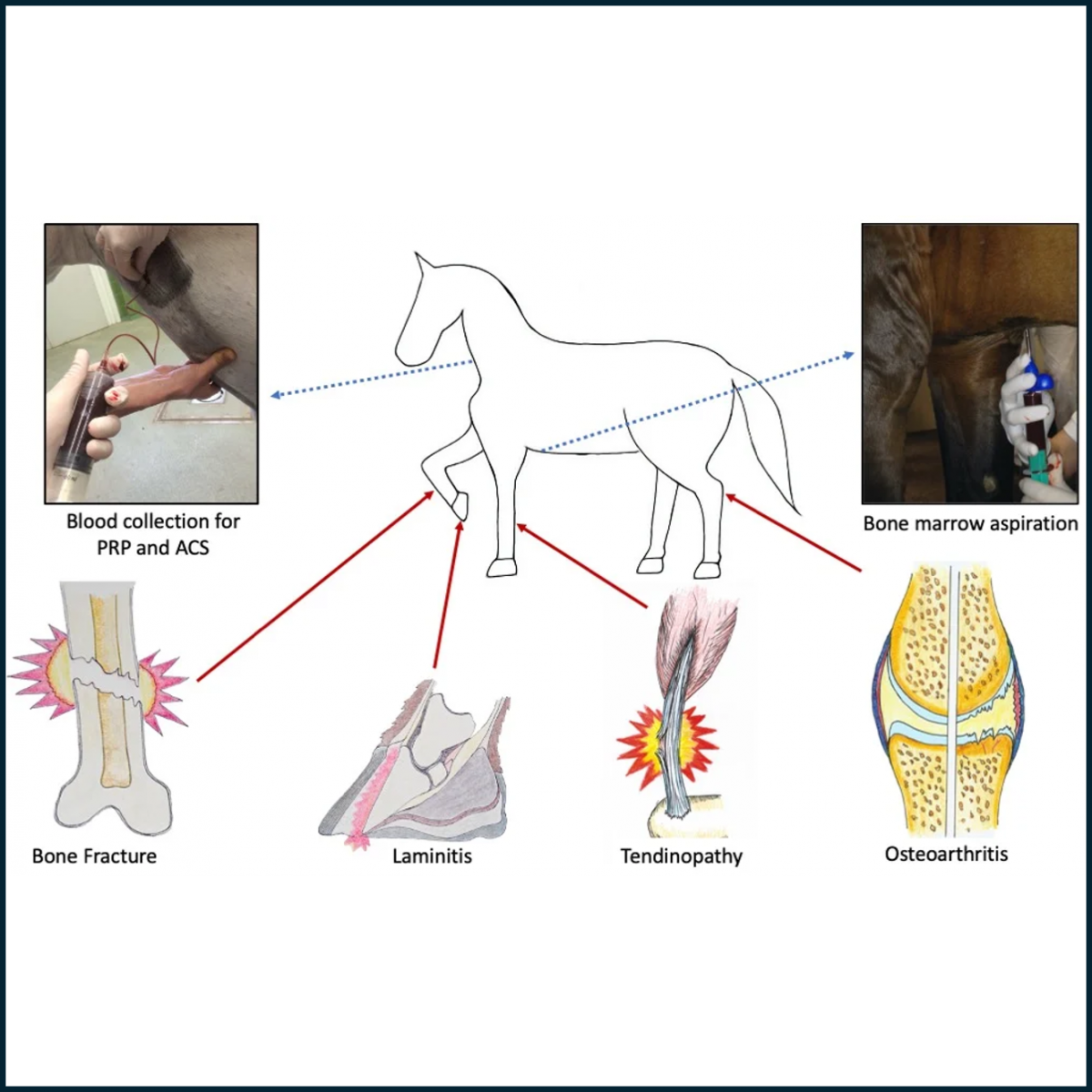
With an intrinsically low ability for self-repair, articular cartilage injuries often progress to cartilage loss and joint degeneration resulting in osteoarthritis (OA). Osteoarthritis and the associated articular cartilage changes can be debilitating, resulting in lameness and functional disability both in human and equine patients.
While articular cartilage damage plays a central role in the pathogenesis of OA, the contribution of other joint tissues to the pathogenesis of OA has increasingly been recognized, prompting a whole organ approach for therapeutic strategies.
In this review, the authors discuss the advancements in gene therapeutic approaches for the treatment of OA with the horse as a relevant patient population as well as an effective and commonly utilized species as a translational model.
In recent years, gene therapy methods have generated significant interest in OA therapy. These utilize viral or non-viral vectors to deliver therapeutic molecules directly into the joint space with the goal of reprogramming the cells' machinery to secrete high levels of the target protein at the site of injection.
Several viral vector-based approaches have demonstrated successful gene transfer with persistent therapeutic levels of transgene expression in the equine joint. As an experimental model, horses represent the pathology of human OA more accurately compared to other animal models. The anatomical and biomechanical similarities between equine and human joints also allow for the use of similar imaging and diagnostic methods as used in humans. In addition, horses experience naturally occurring OA and undergo similar therapies as human patients and, therefore, are a clinically relevant patient population.
The study authors said that further studies utilizing this equine model would not only help advance the field of human OA therapy but would also benefit clinical equine patients with naturally occurring joint diseases.
The field of gene therapy has weathered many setbacks, however, technological advancements resulting in the development of safe and effective vectors and delivery methods have paved the way for increased acceptance and renewed interest in the field.
There have been several successful clinical trials in human medicine (Luxterna® for congenital retinal degeneration and Zolgensma® for spinal muscular atrophy) which resulted in positive effects on the quality of life of the patients. The preclinical studies outlined in this review demonstrate the feasibility and relevance of using the equine joint as a translational model to explore treatment strategies for OA using gene therapy. However, high manufacturing costs associated with vector production and the inherent expensive nature of equine research pose significant challenges to undertaking large preclinical studies using this model. Improvements in vector development technology would likely lead to decreased production costs in the future, however, a growth in resources available for equine research would be vital in moving the field forward.
Parvathy Thampi, R. Jude Samulski, Joshua Grieger, Jennifer Phillips, C. Wayne McIlwraith and Laurie Goodrich. “Gene therapy approaches for equine osteoarthritis.” Front Vet Sci. 2022 Sep 28; 9:962898. doi: 10.3389/fvets.2022.962898.
 Comments
Related Articles



More news





Copyright © 2026 - All Rights Reserved
ISSN 2768-198X
List
Add
Please enter a comment