MY ACCOUNT | NEWSLETTER |

Hepatic copper accumulates in ferrets
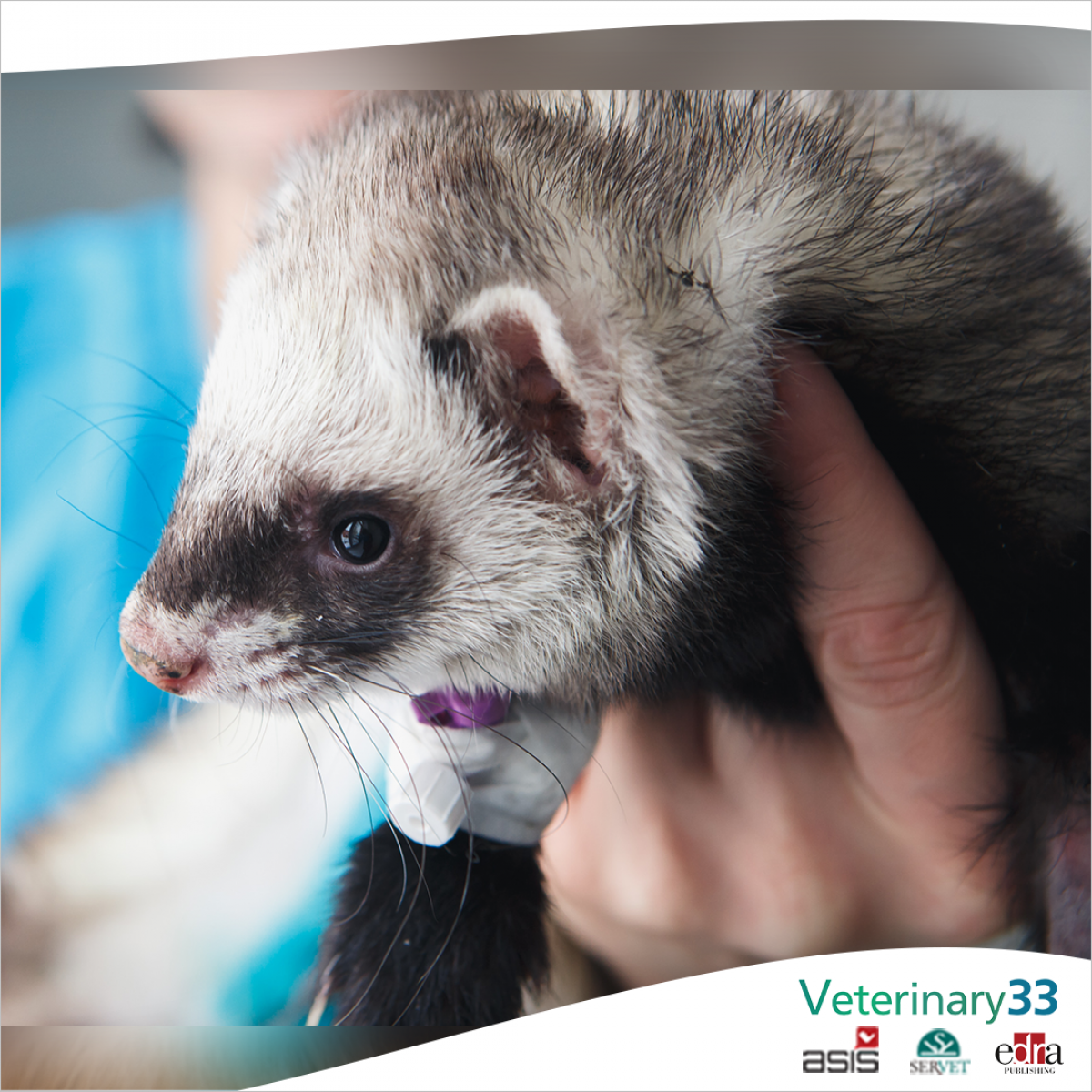

To determine hepatic copper concentrations and zonal distribution in ferrets with and without hepatobiliary disease, validate rhodanine-based qualitative copper scoring and digital copper quantification in ferret hepatic samples, and ascertain whether clinical features predicted copper accumulation.

34 ferrets, including 7 with a necroinflammatory disease, 5 with hepatocellular carcinoma, 13 with a non-necroinflammatory disease, and 9 with no hepatobiliary disease.

Rhodanine-based digital copper quantification was validated by the use of liver dually measured by atomic absorption spectroscopy and digital scanning (R2 = 0.98). Clinical features and hepatic copper scores and concentrations (dry weight liver) were compared between groups. Zonal copper distribution was determined.

Hepatic copper concentration was strongly correlated with copper scores (ρ = 0.88). Ferrets with the hepatobiliary disease were significantly older and had significantly higher serum alkaline phosphatase and γ-glutamyltransferase activities and creatinine concentrations. Centrilobular copper accumulated in 23 of 34 (64%) ferrets with (n = 15) and without (8) hepatobiliary disease. Median copper concentrations were not significantly different between ferrets with and without hepatobiliary disease but were significantly higher within neoplastic hepatic tissue in ferrets with hepatocellular carcinoma. Hepatic copper concentrations exceeded feline (> 180 µg/g) and canine (> 400 µg/g) reference limits in 19 and 9 ferrets, respectively. Hepatic copper > 1,000 µg/g occurred in 5 ferrets with and 2 without the hepatobiliary disease. Clinical features did not predict copper accumulation.

Rhodanine-based digital copper quantification and qualitative copper scoring discerned liver copper accumulation in ferrets. Ferrets with and without hepatobiliary disease displayed a propensity for centrilobular hepatic copper accumulation of uncertain clinical importance. Clinical and clinicopathologic features could not exclusively implicate pathologic copper accumulation.


“Hepatic copper accumulates in ferrets with and without hepatobiliary disease”. Julianne N Richard, et al. Am J Vet Res. 2022 Jan 28;1-10.  doi: 10.2460/ajvr.21.08.0131.


Like0
Dislike0
  • Please enter a comment


Name *
Email address *
Comment *


* Required fields

Information on the processing of your personal data
We inform you that, in compliance with the provisions of current national and European regulations for the Protection of Personal Data and Services of the Information Society and Electronic Commerce, by sending us this form you are expressly giving your consent to Grupo Asís Biomedia , SL, (hereinafter, "ASIS GROUP") so that, as the person in charge, it may process your personal data in order to respond to your request for contact and information by electronic means.

Likewise, when you expressly consent, we will process your personal data to send you specialized information, newsletters, offers and exclusive promotions from GRUPO ASIS and related companies.

For the aforementioned purpose, GRUPO ASIS may transfer your data to other companies linked to GRUPO ASIS or to third party service providers for the management of electronic communications and other security services, even in cases where they are outside of the European Union, provided that they legally guarantee the adequate level of protection required by European regulations.

At any time you can withdraw the consent given and exercise the rights of access, rectification, deletion, portability of your data and limitation or opposition to its treatment by contacting GRUPO ASIS by sending an email to protecciondatos @ grupoasis.com, or by written communication to address at Centro Empresarial El Trovador, 8th floor, office I, Plaza Antonio Beltrán Martínez 1, 50002, Zaragoza (Spain), indicating in either case the Ref. Personal data and the right you exercise, as well as attaching a copy of your ID or replacement identification document.


I have read and accept the treatment of my data according to the informed purpose and according Legal notes and the Privacy Policy
I wish to receive commercial information from GRUPO ASIS and related companies


More news

Penn Vet Announces Interim Leadership for the Department of Clinical Sciences and Advanced Medicine, and Ryan Hospital

Like0
Dislike0

Parnell Launches nixiFLOR® - First FDA-Approved Generic Florfenicol + Flunixin Combination for BRD

Like0
Dislike0

Comparison of two host cell range variants of feline immunodeficiency virus

Like0
Dislike0

Canine babesiosis: a perspective on clinical complications, biomarkers, and treatment

Like0
Dislike0

The use of growth promoters in swine nutrition: Problems and perspectives concerning public health and swine production

Like0
Dislike0

Newsletter


News of interest

EVENTS

Copyright © 2026 - All Rights Reserved
ISSN 2768-198X

Top